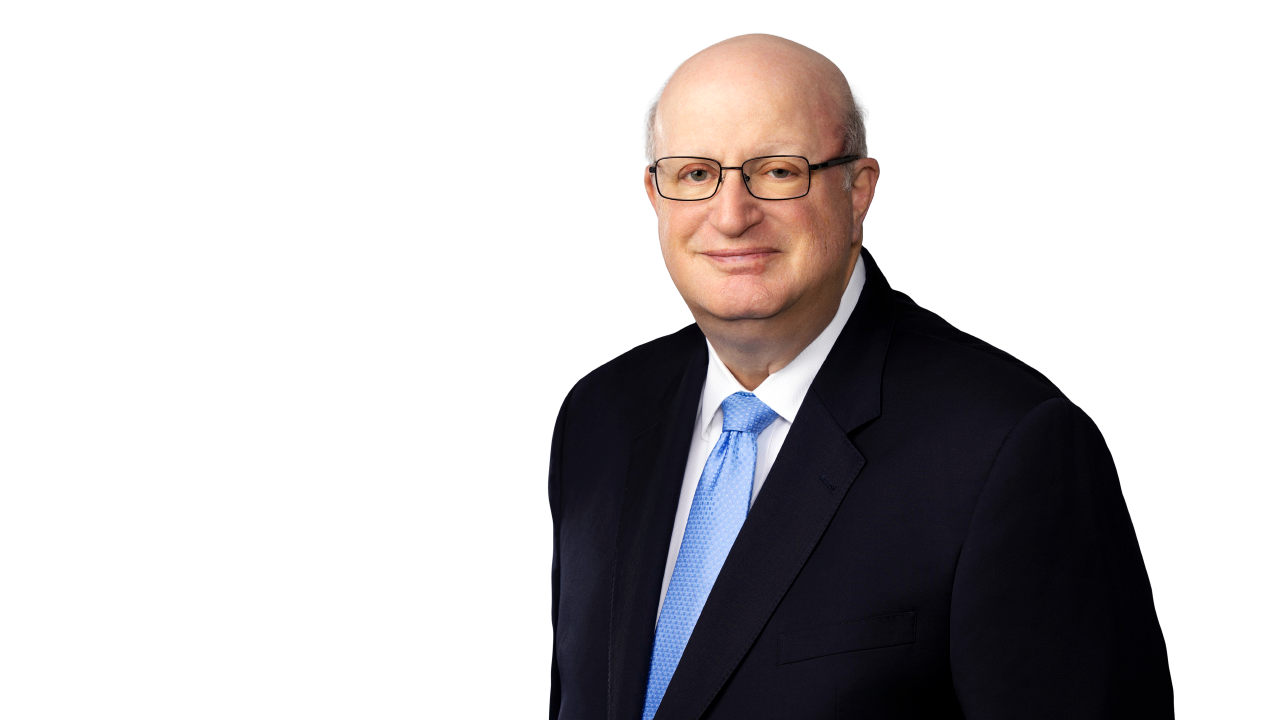
David Levitt Authors Article, "IP: The Trend to End 'Shortcuts' in IP Litigation" in InsideCounsel
In The News | 1 min read
Feb 8, 2011
The U.S. Court of Appeals for the Federal Circuit recently affirmed the vacation of a $388 million judgment in favor of plaintiff, Uniloc, in a patent infringement case, and remanded for a new trial on damages. But what really raised eyebrows was the court’s rejection of the “25 percent rule of thumb” for patent royalties, which continues a trend in the courts to eliminate “shortcuts” in proving various elements that arise in IP litigation.
In Uniloc, the plaintiff sought a reasonable royalty using the traditional factors laid out in Georgia Pacific. However, its expert applied a “25 percent rule of thumb” as his starting point, and then adjusted it up and down depending on the relative weight of the various Georgia Pacific factors. In the end, he found that the factors generally balanced out and did not change the royalty rate and testified that the reasonable royalty was 25 percent of his asserted “product key” value of $10, multiplied by the nearly 226 million products sold. In other words, the damages model introduced in evidence was $2.50 per product, and the expert testified to a reasonable warranty of nearly $565 million. The jury ultimately awarded $388 million.
The Federal Circuit ruled:
“This court now holds as a matter of Federal Circuit law that the 25 percent rule of thumb is a fundamentally flawed tool for determining a baseline royalty rate in a hypothetical negotiation. Evidence relying on the 25 percent rule of thumb is thus inadmissible under Daubert and the Federal Rules of Evidence, because it fails to tie a reasonable royalty base to the facts of the case at issue.”
Related People
Related Locations
Featured Insights

Lawyers' Lawyer Newsletter
Nov 19, 2026
Private Capital and Professional Independence: MSOs and the Changing Business of Law

In The News
Nov 18, 2026
William Schubert: Why Client Confidentiality Reigns Supreme for Motions to Withdraw

In The News
Nov 18, 2026
[Byline] Revisiting Disparate Impact Liability Under Executive Order 14281
Lawyers' Lawyer Newsletter
Nov 19, 2026
Private Capital and Professional Independence: MSOs and the Changing Business of Law
In The News
Nov 18, 2026
William Schubert: Why Client Confidentiality Reigns Supreme for Motions to Withdraw
In The News
Nov 18, 2026
[Byline] Revisiting Disparate Impact Liability Under Executive Order 14281

In The News
Nov 17, 2026
Justin Penn Examines FCRA Trends Involving “Legal vs. Factual Inaccuracy” Defense
Consumer Crossroads: Where Financial Services and Litigation Intersect
Nov 16, 2026
SCOTUS to Decide: Are Bankruptcy Stay Violations Arbitrable?

Press Release
Nov 13, 2026
Hinshaw Advises Client Safe Harbor Capital Partners in $44 Million Financing

Event
Nov 13, 2026

In The News
Nov 12, 2026
Spencer Kook Authors Article Providing a Claims Manager’s Guide to Class Action Exposure

In The News
Nov 12, 2026
Mitch Chargo Discusses Cannabis M&A Implications in a Post-Rescheduling Landscape
Webinar
Nov 12, 2026
Michael Adams Presents on Navigating Ethics in the Digital Age

Event
Nov 12, 2026
Cathy Mulrow-Peattie Discusses AI and Supply Chain Cybersecurity

Healthcare Alert
Nov 11, 2026
Illinois Enacts 340B Contract Pharmacy Protections: 7 Steps Covered Entities Should Take