
California Supreme Court Clarifies Pleading Standards for Excess Policy Claims
Scott Seaman Analyzes What the Decision Means for Declaratory and Bad-Faith Claims
Insights for Insurers Alert | 6 min read
Aug 7, 2026
In a recent decision, the California Supreme Court recognized that an actual, justiciable controversy is required to assert declaratory judgment claims under an excess insurance policy. The court ruled that, to adequately assert a declaratory judgment claim under an excess policy, the policyholder must allege a “reasonable likelihood” that the policyholder’s potential liability will reach into the excess coverage.
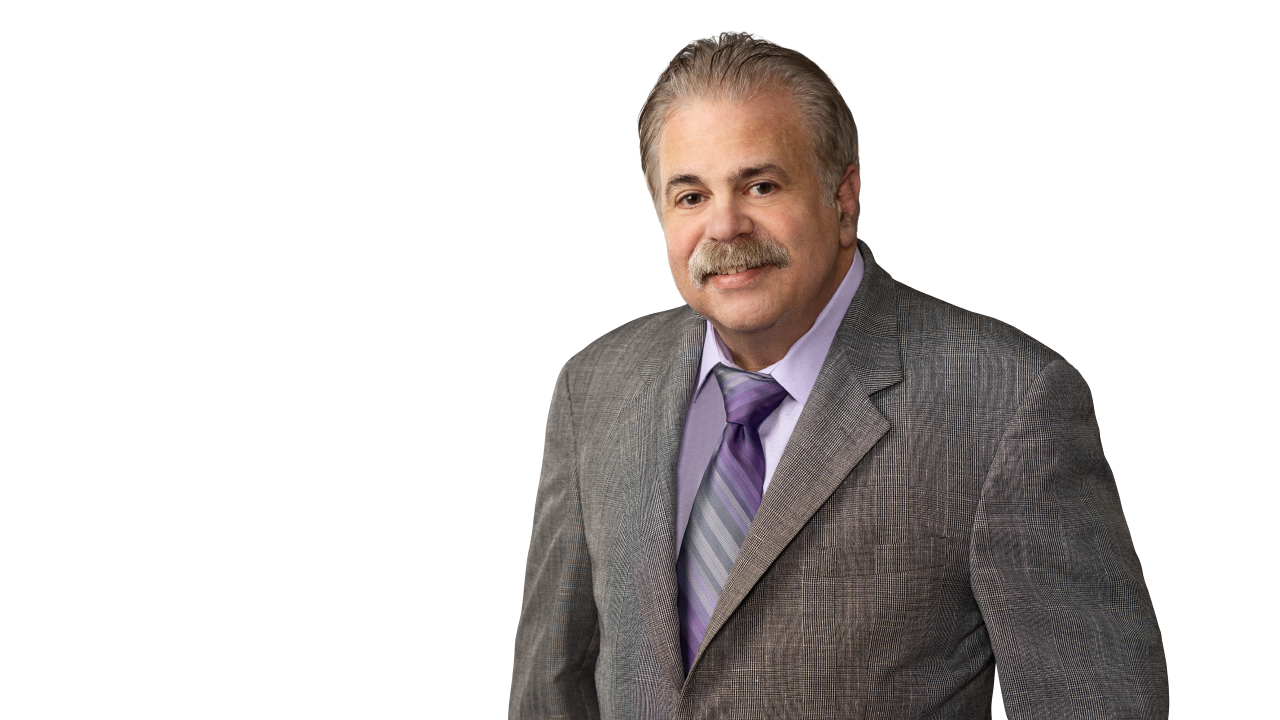
The court, however, rejected the requirement applied by some courts that the policyholder show that the underlying limits have already been exhausted. The court also addressed the requirements for pleading a bad-faith claim with respect to an excess policy under California law. Scott Seaman, Chicago-based partner and Co-Chair of Hinshaw & Culbertson LLP’s Global Insurance Services Practice Group, was recently quoted in a Law360 article discussing the bad-faith aspects of this decision.
The Justiciable Controversy Requirement
A common issue is whether an excess insurance contract can be subject to coverage litigation where the underlying limits have not yet been exhausted. Generally, excess policies are included in counts for declaratory judgment as opposed to claims for breach of contract or insurance bad faith. Of course, a declaratory judgment requires that there be an actual controversy.
Courts have applied different standards in determining whether there is an actual judicial controversy. Many courts apply a “reasonable likelihood” approach, holding that a justiciable dispute exists if the policyholder’s potential liability is practically or reasonably likely to reach excess policy.
In Fox Paine & Co., LLC v. Twin City Fire Ins. Co., No. S287404, 2026 WL 2148053 (Cal. July 27, 2026), the California Supreme Court rejected the Court of Appeals’ requirement that the policyholder assert exhaustion of underlying limits. The California Supreme Court held that, although policyholders “must adequately plead their covered losses, the relevant principles governing the availability of declaratory relief do not support a strict rule that would withhold this relief whenever exhaustion has not also been alleged.”
The court does not permit the policyholder to ignore the issue of attachment points of the excess policy, nor does it eviscerate the requirement of underlying exhaustion. Instead, the court recognizes that adequate pleading requires the policyholder to allege a “reasonable likelihood” that the policyholder’s potential liability will reach into the relevant excess coverage.
The court’s ruling is essentially a decision on what is needed to allege a judicial or actual case or controversy in the context of declaratory judgment claims. This is different from what is required to establish a claim for breach of contract, which requires that the contract terms be enforced and that the excess policy actually be implicated by the claim or loss.
In this context, a “reasonable likelihood” may be sufficient to create a case or controversy and to avoid serial, separate coverage actions as policyholders work their way up their coverage charts with respect to large losses. This is how coverage actions involving large losses and “long-tail” coverage claims have proceeded in many instances.
The “Reasonable Likelihood” Pleading Standard
Chief Justice Patricia Guerrero, writing for a unanimous court, stated an “actual controversy over insurance coverage may exist even when coverage depends on the satisfaction of a future contingency or contingencies.” She noted that requiring policyholders to prove exhaustion before filing suit places “too much emphasis on the fact that a contingency exists, and too little on the likelihood it will occur.” The pleading standard adopted by the court requires a policyholder to allege a “reasonable likelihood” that their losses will reach an excess policy’s attachment point, but not that underlying exhaustion has already taken place.
Importantly, this is a pleadings decision, not a merits decision. Pleading a claim for declaratory judgment is not—and should not be considered to be—tantamount to pleading a claim for breach of contract. The court points out that the policyholder “bears the burden . . . of adequately pleading a covered loss sufficient to create an actual controversy regarding each excess policy in light of its attachment point.”
The court recognizes that there is no “one size fits all” claims pleading standard. When declaratory relief is sought, the policyholder must adequately allege that the insured’s coverage losses are sufficient to reach that policy. Otherwise, any disagreement regarding coverage and liability is merely academic because the policyholder has provided no reason to believe that the contingency of reaching the excess policy’s attachment point will occur.
When the amount of loss is fully known prior to filing the pleading, a policyholder may reasonably be expected to plead this amount and the amount that constitutes the covered amount. In situations involving uncertainties material to whether a policyholder’s losses or liabilities are sufficient to reach an excess policy, the “reasonable likelihood approach” provides an appropriate method at the pleadings stage.
Excess policies require exhaustion of underlying limits and that a loss implicate the policies’ attachment points as a condition to coverage. The California Supreme Court’s decision refers to the Qualcomm decision but does not address the issue of functional exhaustion.
The court did not reverse the Court of Appeals decision outright and did not conclude that the complaint at issue was adequate. Instead, it remanded the case to the Court of Appeal to reevaluate the adequacy of the pleading. It agreed with the Court of Appeal that the pleading was flawed insofar as it commingles covered loss with non-recoverable interest.
Bad Faith Claims Against Excess Insurers
With respect to bad faith claims, the court ruled that, to plead a claim of tortious breach of the implied covenant of good faith and fair dealing, the policyholder “needs only to allege facts that, taken as true, are sufficient to show that coverage under a defendant insurer’s excess policy will attach—or that it would attach, if not for the excess insurer’s bad-faith conduct—and that the insurer’s misconduct has impaired the insured’s recovery of benefits owed to it under the policy.”
For excess insurers, the decision confirms that the implied covenant of good faith and fair dealing operates from the inception of the policy, not merely once the policy attaches. Conduct occurring before exhaustion, such as allegedly favoring rival claimants or concealing coverage decisions and settlements from the insured, potentially can give rise to tort liability.
In the Law360 article on the decision, reporter Jennifer Mandato notes:
“Excess insurers should rarely be exposed to bad faith claims,’ Scott M. Seaman, a partner at Hinshaw & Culbertson LLP, told Law360 in a written statement. ‘Generally, they have no duty to defend and no obligation to extend coverage for claims that do not implicate their limits.”
[…]
In looking at the current state of the insurance industry, Seaman warned that bad faith claims contribute ‘appreciably’ to social inflation, a term used to describe how insurers’ liability costs are increasing above general economic inflation.
Bad faith claims can drive higher settlement values and inflate recoveries beyond policy benefits, he explained.
Easing the ability to pursue a bad faith claim could increase the cost and decrease the availability of insurance, encouraging “policyholders to engage in protracted and expensive scorched earth litigation," Seaman said.
The decision recognizes that it would be “unusual circumstances” for there to be a valid bad faith claim absent coverage. Further, the court specifically stated that it was declining to address the insurers’ arguments that the policyholder failed to allege facts sufficient to show unreasonable conduct amounting to tortious bad faith on their part and stated those arguments may be presented on remand. The court also pointed out that the bad faith allegations must be proven for a plaintiff to recover for tortious bad faith, “which may present its own set of challenges.”
Practical Implications for Excess Insurers
Excess insurers have several options available to them in the wake of this decision including holding policyholders to their burden to plead the liability is “reasonably likely” to implicate the excess policy, seeking to stay or phase discovery or the litigation where warranted, establishing the absence of coverage through motion practice, and engaging in an activity level consistent with their view of whether their excess policy ultimately will be impacted.
Where the excess policy is “reasonably likely” to be involved, the excess insurer may be well-served by playing some role in the litigation rather than sitting on the litigation sidelines and waiting to be presented with a cake that already is baked. The opinion itself points out that courts have the inherent power to control litigation before them.
Although other courts have applied a more stringent standard to implicate excess policies, this is a pleading decision, and the California Supreme Court recognizes the importance of implicating the attachment point of the respective excess policies.
Related People
Related Capabilities
Featured Insights

In The News
Oct 26, 2026
Scott Seaman Examines the Insurance Coverage Implications of a Recent NFL Concussion Ruling

In The News
Oct 26, 2026
Scott Seaman Examines the Insurance Coverage Implications of a Recent NFL Concussion Ruling

In The News
Oct 23, 2026
Michael Dowell Discusses Potential Impact of Proposition 44 on California Community Clinics

Consumer Crossroads: Where Financial Services and Litigation Intersect
Oct 22, 2026

In The News
Oct 21, 2026
Scott Seaman Says Walmart Ruling is an "Aberration" in the Opioid Insurance Battle

Event
October 21 – 23, 2026
D.L. Morriss Presents on International Banking Litigation and AI Regulation

Press Release
Oct 20, 2026
Seasoned Litigator Joins Hinshaw's Aviation and Aerospace Team in Chicago

Consumer Crossroads: Where Financial Services and Litigation Intersect
Oct 19, 2026
Refile, Repeat: Ohio’s Savings Statute Allows for Unlimited Bites of a Time-Barred Claim

Consumer Crossroads: Where Financial Services and Litigation Intersect
Oct 16, 2026
Key Takeaways from the 2026 ACVL Conference for the Auto Finance Industry

Press Release
Oct 16, 2026
Nia Binns Re-Appointed Health and Wellness Committee Co-Chair of the BWLA

