
Another Court Refuses Lost Note Status to a Successor Lender
Last year, we reported on a Massachusetts Land Court decision, which interpreted Uniform Commercial Code section 3-309 to conclude that a mortgagee cannot foreclose in reliance upon a lost note affidavit, because the 1990 version of UCC 3-309 requires the party seeking to enforce the note demonstrate possession prior to its loss. 32 states remain under the 1990 version, and recently the Rhode Island Supreme Court joined decisions that prohibit enforcement of a lost note under this outdated version of the UCC. In SMS Fin. v. Corsetti, SMS Financial sued to enforce default on a note that was lost by a prior transferee. Sovereign Bank had loaned the defendants $1 million in exchange for a promissory note and a mortgage on property located at 385 South Main Street in Providence, Rhode Island. Following default and foreclosure, the defendants issued to Sovereign a new promissory note to repay the $200,000 deficiency on the original loan. Sovereign subsequently assigned its interest in the loan to SMS Financial; but, Sovereign had lost the original note so it delivered to SMS a lost note affidavit and an allonge. SMS filed suit against the defendants to collect on breach of the note, but the Superior Court entered summary judgment in favor of the defendants because SMS could not enforce the lost note.
The Rhode Island Supreme Court affirmed summary judgment in favor of the defendants. Rhode Island is one of the 32 states that remain under the 1990 version of UCC 3-309, which means that a person not in possession of the note is only entitled to enforce that note if that person was in possession of the note and entitled to enforce it when loss of possession occurred. Chief Justice Suttell, writing for the Court, concluded that the plain language of section 3-309 demonstrated that SMS was not entitled to enforce the note because Sovereign Bank, and not SMS, possessed the note when it was lost. Justice Suttell noted that an amended version of UCC 3-309 enabled the transferee of a lost to enforce the instrument. He wrote that "[w]hile some states have followed suit and amended their codes to comport with the amended Section 3-309 of the UCC, Rhode Island has not done so. The remedy for situations such as the instant matter, where a party to an instrument can 'escape liability,' falls squarely within the purview of the Legislature."
As a reminder, the 32 states that have yet to adopt the 2002 amendment to UCC 3-309 are: Alaska, Arizona, California, Colorado, Connecticut, Delaware, Georgia, Hawaii, Idaho, Illinois, Louisiana, Maine, Maryland, Massachusetts, Missouri, Montana, New Jersey, New Mexico, New York, North Carolina, North Dakota, Oregon, Pennsylvania, Rhode Island, South Dakota, Utah, Vermont, Virginia, Washington, West Virginia, Wisconsin, Wyoming.
Featured Insights
Event
October 21 – 23, 2026
D.L. Morriss Presents on International Banking Litigation and AI Regulation

Press Release
Oct 20, 2026
Seasoned Litigator Joins Hinshaw's Aviation and Aerospace Team in Chicago

Consumer Crossroads: Where Financial Services and Litigation Intersect
Oct 19, 2026
Refile, Repeat: Ohio’s Savings Statute Allows for Unlimited Bites of a Time-Barred Claim


Event
October 21 – 23, 2026
D.L. Morriss Presents on International Banking Litigation and AI Regulation
Press Release
Oct 20, 2026
Seasoned Litigator Joins Hinshaw's Aviation and Aerospace Team in Chicago
Consumer Crossroads: Where Financial Services and Litigation Intersect
Oct 19, 2026
Refile, Repeat: Ohio’s Savings Statute Allows for Unlimited Bites of a Time-Barred Claim

Consumer Crossroads: Where Financial Services and Litigation Intersect
Oct 16, 2026
Key Takeaways from the 2026 ACVL Conference for the Auto Finance Industry
Press Release
Oct 16, 2026
Nia Binns Re-Appointed Health and Wellness Committee Co-Chair of the BWLA
In The News
Oct 16, 2026
Jennifer Driscoll Explains How Bond Request Spurred AG Settlement in Paramount Merger

Consumer Crossroads: Where Financial Services and Litigation Intersect
Oct 15, 2026
OCC Releases Debanking Report on Largest Banks; CFPB Announces Follow-On Initiative
In The News
Oct 14, 2026
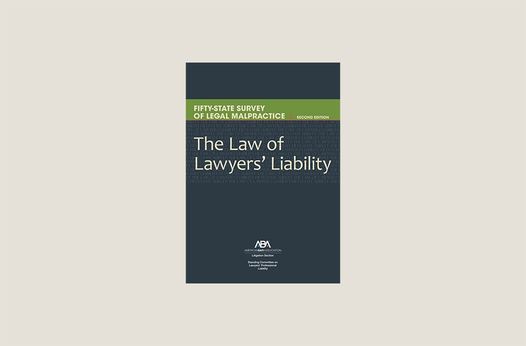
Hinshaw Attorneys Contribute Rhode Island Chapter in ABA Legal Malpractice Survey

Privacy, Cyber & AI Decoded Alert
Oct 13, 2026
California’s SB 690 Removes Some CIPA Claims, But Privacy and Legal Risks Remain

