
No Surrender: Massachusetts Appeals Court Preserves Foreclosure Challenges for Bankruptcy Petitioner
2 min read
Sep 8, 2017
Like Bruce Springsteen, a Massachusetts bankruptcy debtor said "no surrender" when it came to his home. In EverBank v. Chacon, a panel of the Massachusetts Appeals Court issued a non-binding decision that a debtor's "surrender" of real property in a bankruptcy petition does not waive defenses to an eventual foreclosure. EverBank had foreclosed on Mr. Chacon's home mortgage, acquired the property at the sale, and then sought to evict him through summary process action filed in Massachusetts state court. Mr. Chacon claimed that that EverBank did not comply with a HUD regulation that requires a face to face meeting prior to foreclosure rendering the foreclosure void.
The trial judge found that Mr. Chacon's foreclosure defense was barred by waiver and judicial estoppel because in his chapter 7 bankruptcy, Chacon had stated an intent to surrender the property under Section 521(a)(2)(A) of the Bankruptcy Code. The judge determined that the bankruptcy surrender was a condition of the discharge of the debt to EverBank that Mr. Chacon had obtained, and he thus waived any right to assert non-compliance with HUD regulations as a defense to EverBank's subsequent foreclosure on the property.
On appeal, the panel disagreed for two reasons. First, Mr. Chacon did not surrender the property to EverBank. Rather, Section 521(a)(4) of the Code required Mr. Chacon to surrender all property of the estate to the trustee. Further, the trustee had abandoned the property after Mr. Chacon's surrender because the mortgage was underwater, which transferred the property back to Chacon under Section 554(c). Second, the panel rejected Everbank's argument that Mr. Chacon's discharge was conditioned on his intent to surrender the property. Instead, the panel concluded he was entitled to the discharge regardless of his intent with regards to the property. The panel also relied heavily on language in Section 521(a)(2)(B), which provides that a debtor's rights to property that secures a debt are not altered by his statement of intent to surrender or retain it.
The panel noted that bankruptcy and federal courts have significantly disagreed on the meaning of surrender and its effect on non-bankruptcy rights. This dispute particularly relates to whether surrender has the same meaning under both Sections 521(a)(2)(A) and 521(4). The panel did not offer a definition of the term and instead relied on its unsettled nature to determine that the standards for waiver and judicial estoppel were not met. Moreover, the panel could not say whether Mr. Chacon had clearly and intentionally relinquished a right (waiver), or that his foreclosure challenge was clearly inconsistent with his position during the bankruptcy (judicial estoppel).
It is worth noting that the Appeals Court issued this opinion under Rule 1:28, which results in a non-binding decision and with no precedential value. Nevertheless, the decision demonstrates the ambiguity of the term surrender both in and out of the bankruptcy context, and the potential pitfalls of mortgagees and mortgage loan services utilizing bankruptcy concessions to avoid foreclosure litigation.
Related Capabilities
Featured Insights
In The News
Oct 21, 2026
Scott Seaman Says Walmart Ruling is an "Aberration" in the Opioid Insurance Battle
Event
October 21 – 23, 2026
D.L. Morriss Presents on International Banking Litigation and AI Regulation

Press Release
Oct 20, 2026
Seasoned Litigator Joins Hinshaw's Aviation and Aerospace Team in Chicago


In The News
Oct 21, 2026
Scott Seaman Says Walmart Ruling is an "Aberration" in the Opioid Insurance Battle
Event
October 21 – 23, 2026
D.L. Morriss Presents on International Banking Litigation and AI Regulation
Press Release
Oct 20, 2026
Seasoned Litigator Joins Hinshaw's Aviation and Aerospace Team in Chicago

Consumer Crossroads: Where Financial Services and Litigation Intersect
Oct 19, 2026
Refile, Repeat: Ohio’s Savings Statute Allows for Unlimited Bites of a Time-Barred Claim

Consumer Crossroads: Where Financial Services and Litigation Intersect
Oct 16, 2026
Key Takeaways from the 2026 ACVL Conference for the Auto Finance Industry
Press Release
Oct 16, 2026
Nia Binns Re-Appointed Health and Wellness Committee Co-Chair of the BWLA

In The News
Oct 16, 2026
Jennifer Driscoll Explains How Bond Request Spurred AG Settlement in Paramount Merger

Consumer Crossroads: Where Financial Services and Litigation Intersect
Oct 15, 2026
OCC Releases Debanking Report on Largest Banks; CFPB Announces Follow-On Initiative
In The News
Oct 14, 2026
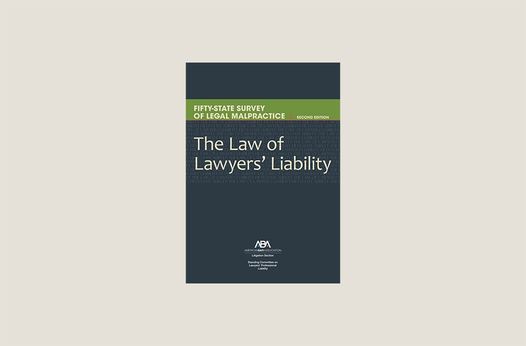
Hinshaw Attorneys Contribute Rhode Island Chapter in ABA Legal Malpractice Survey

