
Employers’ Ability to Collect Attorney’s fees in wage Cases Restricted by new Bill
3 min read
Aug 29, 2013
On August 26, 2013, California Governor Jerry Brown signed Senate Bill 462 into law, making it harder for employers to obtain attorney’s fees in certain employment wage claim cases.
Prior to the passage of SB 462, section 218.5 of the California Labor Code required a court in any action brought for the nonpayment of wages, fringe benefits, or health and welfare pension fund contributions, to award reasonable attorney’s fees and costs to the prevailing party who requests such fees and costs at the outset of the case, regardless of whether the prevailing party was the employer or the employee.
SB 462 changed that, providing instead that an employer cannot obtain attorney’s fees under section 218.5 just by prevailing — it must also establish that the employee brought the court action “in bad faith.” By contrast, an employee can still obtain attorney’s fees and costs where he or she prevails, without having to prove “bad faith.”
The bill is a response to the California Supreme Court’s decision in Kirby v. Immoos Fire Protection, Inc. which, while denying section 218.5 attorney’s fees in the case before it, affirmed that section 218.5 “awards fees to the prevailing party whether it is the employee or the employer; it is a two-way fee-shifting provision.” Following the Court’s issuance of that opinion, plaintiffs’ attorneys have been seeking to change fee shifting provisions of section 218.5, claiming that a two-way fee-shifting provision has a chilling effect on contractual wage claims.
Opponents of the measure, as reported in the official senate records on the bill, point out that section 218.5 has been in place since 1986, that Kirby merely reaffirmed its clear language, and that the bill will “incentivize further meritless wage and hour litigation.”
What does the law mean for employers? First, it is important to note that while SB 462 raises the bar for employers to obtain attorney’s fees where they prevail in such cases, this law does not apply to minimum wage or overtime claims. Another provision of the Labor Code, section 1194, already provides for just a one-way fee-shifting provision, providing attorney’s fees to employees who are successful in proving their overtime and minimum wage claims, but not corresponding attorney’s fees to successful employers.
In other words, the Labor Code, which is already quite lopsided in favor of employees seeking attorney’s fees, has just become more lopsided.
The meaning of the law’s “bad faith” provision is also far from certain. Until subsequent litigation settles the matter, we can only be guided by cases that have sought to define “bad faith” in similar contexts.
For example, in Gemini Aluminum Corp v. Cal. Custom Shapes the Court dealt with a statute awarding attorney’s fees to successful defendants in claims under the Uniform Trade Secrets Act, which provides such fees if a claim of misappropriation is made “in bad faith” — a term which, as in the present case, was not defined by the statute. The court ruled that “bad faith” requires objective “speciousness” of the plaintiff’s claim together with subjective bad faith in bringing or maintaining the claim.
If such a standard is adopted in the context of section 218.5, it might have the unexpected consequence of increasing the prevalence of discovery aimed at the subjective intentions of the plaintiff employee, which might conceivably justify more extensive inquiries into the employee’s personal life and circumstances. This is perhaps one small silver lining employers and employment defense attorneys can take away from what is, on the whole, a win for the plaintiff’s bar.
To discuss SB 462, or other aspects of wage and hour law, please contact the author.
Topics
Featured Insights
In The News
Oct 14, 2026
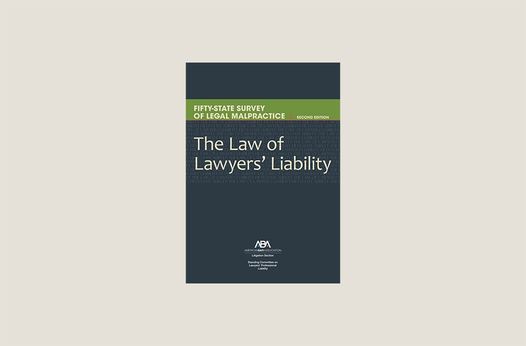
Hinshaw Attorneys Contribute Rhode Island Chapter in ABA Legal Malpractice Survey


In The News
Oct 14, 2026
Hinshaw Attorneys Contribute Rhode Island Chapter in ABA Legal Malpractice Survey

Privacy, Cyber & AI Decoded Alert
Oct 13, 2026
California’s SB 690 Removes Some CIPA Claims, But Privacy and Legal Risks Remain
Press Release
Oct 12, 2026
Two Hinshaw Partners Reappointed to the NYC Bar Association’s Consumer Affairs Committee
Press Release
Oct 9, 2026
Adam Topel Appointed Chair-Elect of the ABA’s TIPS Appellate Advocacy Committee

Press Release
Oct 8, 2026
Technology Service Corporation Closes on Acquisition by Blackstone-Backed Purchaser

Employment Law Observer
Oct 8, 2026
“We Didn’t Know” is No Longer an Employer Defense for Religious Accommodation Claims Under Title VII

