
Eighth Circuit: Undocumented Restaurant Workers were Entitled to FLSA Protection
2 min read
Jul 30, 2013
—In a decision issued on July 29, 2013, the Eighth Circuit Court of Appeals became the second federal circuit to find that the Fair Labor Standards Act’s minimum wage protections extend to undocumented workers, such that those workers can file wage claims and recover damages. Addressing the issue in the shadow of a 2002 U.S. Supreme Court decision that denied similar awards for back pay to undocumented workers under the National Labor Relations Act, the panel of Eighth Circuit judges refused to extend that case’s reasoning. “The FLSA does not allow employers to exploit any employee’s immigration status,” the judges concluded, “or to profit from hiring unauthorized aliens in violation of federal law.”
The case, Lucas v. Jerusalem Café, LLC, Case No. 12-2170 (8th Cir. July 29, 2013), stemmed from a restaurant’s employment of six undocumented workers between 2007 and 2010. The workers were paid a set weekly amount regardless of hours worked, such that employees were effectively paid as little as $3.90 per hour. After relations soured between the owners and the undocumented workers, they filed suit seeking unpaid FLSA wages. Rejecting the employer’s “fantastic story” that the workers were “volunteers” during their three years of work, a jury awarded the workers over $440,000 in wages, damages, and fees. The employer appealed the verdict to the Eighth Circuit, arguing that the verdict should be set aside on the theory that “the FLSA does not apply to employers who illegally hire unauthorized aliens.”
The Eighth Circuit dismissed the appeal and affirmed the jury’s award. Noting at the outset that the FLSA’s definition of “employee” is “the broadest … that has ever been included in any one act,” the panel found “[no] indication that Congress meant to exclude unauthorized aliens” from that definition. The employer, in an attempt to avoid the panel’s “plain language” conclusion, pointed to the U.S. Supreme Court’s decision in Hoffman Plastic Compounds, Inc. v. NLRB, 535 U.S. 137 (2002), arguing that Hoffman indicated that Congress, by enacting Immigration Reform and Control Act of 1986 (IRCA), had “implicitly amended the FLSA to exclude unauthorized aliens.” The Eighth Circuit denied that argument, finding that Hoffman did not stand for such a broad proposition and, further, that Congress’ intent when enacting the IRCA was actually consistent with the FLSA’s definition of “employee”. “The IRCA unambiguously prohibits hiring unauthorized aliens,” the panel concluded, “and the FLSA unambiguously requires that any unauthorized aliens—hired in violation of federal immigration law—be paid minimum and overtime wages. The IRCA and FLSA together promote dignified employment conditions for those working in this country, regardless of immigration status, while firmly discouraging the employment of individuals who lack work authorization.”
This decision is a significant one for employers, and particularly underscores the importance of maintaining proper wage and hours policies for all workers. Now that two federal circuits — the Eighth and the Eleventh — have firmly come down on the side of awarding FLSA wages to undocumented workers, other courts can be expected to follow suit. As a result, employers who feel that they have no obligation to provide unpaid FLSA wages to an employee who is discovered to be working illegally will be sorely mistaken — all employees, even undocumented ones, can file claims and recover wages under the FLSA.
Topics
Featured Insights


Press Release
Oct 8, 2026
Technology Service Corporation Closes on Acquisition by Blackstone-Backed Purchaser

Employment Law Observer
Oct 8, 2026
“We Didn’t Know” is No Longer an Employer Defense for Religious Accommodation Claims Under Title VII



Press Release
Oct 8, 2026
Technology Service Corporation Closes on Acquisition by Blackstone-Backed Purchaser
Employment Law Observer
Oct 8, 2026
“We Didn’t Know” is No Longer an Employer Defense for Religious Accommodation Claims Under Title VII

In The News
Oct 8, 2026
Lucy Wang Analyzes What Insurers Need to Know About Two New California Laws

Lawyers' Lawyer Newsletter
Oct 8, 2026
The Rise of Management Service Organizations: How Lawyers and Lawmakers are Responding
In The News
Oct 7, 2026
Scott Seaman Discusses Google’s Coverage Battle Over Social Media Addiction Claims

Consumer Crossroads: Where Financial Services and Litigation Intersect
Oct 6, 2026
Mixed Messages Ongoing as Courts Disagree Whether Texts Constitute “Calls” Under the TCPA
Press Release
Oct 5, 2026
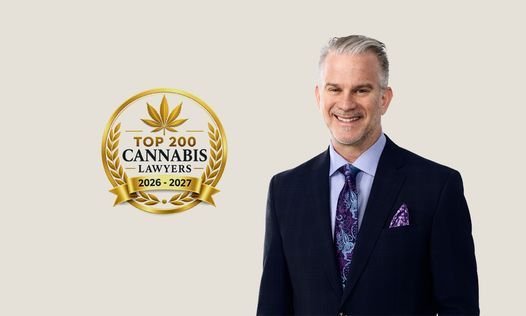
Mitchel Chargo Selected to the Seventh Edition of the Global Top 200 Cannabis Lawyers Directory

