
SCOTUS to Decide Whether Non-Judicial Mortgage Foreclosures are Subject to the FDCPA
For mortgage servicers and foreclosure firms, yesterday's oral argument before the Supreme Court in Obduskey v. McCarthy & Holthus LLP, U.S. Supreme Court, 17-1307 and the upcoming decision, could be a game changer. At issue: a split in the federal circuits over whether the non-judicial foreclosure of a mortgage constitutes debt collection, as defined by the Fair Debt Collection Practices Act.
Petitioner, Dennis Obduskey, defaulted on his mortgage in 2009, and Wells Fargo hired McCarthy & Holthus LLP to complete a non-judicial foreclosure. In 2015, Obduskey filed suit against the firm alleging its notice of default failed to state the amount of the debt Obduskey owed in violation of the Fair Debt Collection Practices Act (FDCPA). The case was originally heard by the United States District Court for the District of Colorado, which found that the FDCPA did not apply to non-judicial foreclosures seeking to enforce a mortgage security interest in property. In January 2018, the Tenth Circuit affirmed, holding that because Colorado law did not permit the recovery of any amount in excess of the value of the property (the deficiency) the non-judicial foreclosure enforcing the mortgage security interest did not seek to recover money and was not "debt collection" as defined by the FDCPA. The Tenth Circuit's decision contradicted the Third, Fourth and Sixth Circuits, which all held that the FDCPA applied to non-judicial foreclosures. The U.S. Supreme Court granted certiorari in June of 2018 to address the split in the circuits.
Monday's argument focused on 1) the plain meaning of the FDCPA's definition of "debt collector" and 2) whether "enforcement of a security interest" seeks the payment of money. The parties debated whether the definition of "debt collector" as set forth at Section 1692a(6) is expanded upon or limited by the final sentence of Section 1692a(6), which provides, "for purposes of section 1692f(6) of this title, [the] term also includes any person who uses any instrumentality of interstate commerce or the mails in any business the principal purpose of which is the enforcement of security interests." Section 1692f precludes debt collectors from engaging in certain unfair actions, and subsection (6) specifically prohibits taking, or threatening to take, "any non-judicial action to effect dispossession of or disablement of property" where there is no right or intention to take possession of the property or the property is exempt by law. Several Justices on the Court questioned why the Act would include this separate provision specifically applicable to enforcing a security interest if Congress had intended the broad "debt collector" definition in 1692a to apply to both the collection of money debts and non-judicial foreclosures of property. The Court also questioned whether a notice seeking to enforce a security interest would be understood by an average consumer to be collection of a money debt, regardless of whether deficiency can be recovered in a non-judicial foreclosure. Unsurprisingly, in addition to the issues pertinent to the case, the briefing raised issues of states' rights to govern the disposition of private property versus federal rights to regulate commerce. Thirty states utilize non-judicial foreclosure statutes, and thus, should the Court reverse the 10th Circuit's decision, standard practices to complete non-judicial foreclosures will change significantly.
We will be following the outcome of this important case closely—stay tuned.
Featured Insights

Consumer Crossroads: Where Financial Services and Litigation Intersect
Oct 16, 2026
Key Takeaways from the 2026 ACVL Conference for the Auto Finance Industry

Press Release
Oct 16, 2026
Nia Binns Re-Appointed Health and Wellness Committee Co-Chair of the BWLA
In The News
Oct 16, 2026
Jennifer Driscoll Explains How Bond Request Spurred AG Settlement in Paramount Merger
Consumer Crossroads: Where Financial Services and Litigation Intersect
Oct 16, 2026
Key Takeaways from the 2026 ACVL Conference for the Auto Finance Industry
Press Release
Oct 16, 2026
Nia Binns Re-Appointed Health and Wellness Committee Co-Chair of the BWLA
In The News
Oct 16, 2026
Jennifer Driscoll Explains How Bond Request Spurred AG Settlement in Paramount Merger

Consumer Crossroads: Where Financial Services and Litigation Intersect
Oct 15, 2026
OCC Releases Debanking Report on Largest Banks; CFPB Announces Follow-On Initiative
In The News
Oct 14, 2026
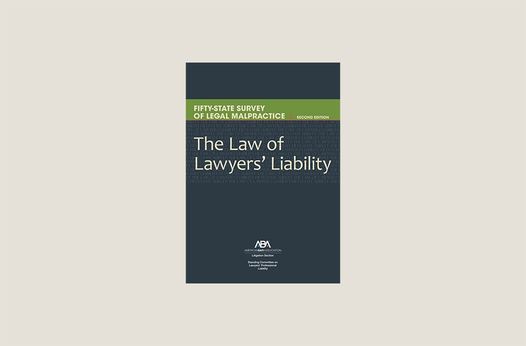
Hinshaw Attorneys Contribute Rhode Island Chapter in ABA Legal Malpractice Survey

Privacy, Cyber & AI Decoded Alert
Oct 13, 2026
California’s SB 690 Removes Some CIPA Claims, But Privacy and Legal Risks Remain

Press Release
Oct 12, 2026
Two Hinshaw Partners Reappointed to the NYC Bar Association’s Consumer Affairs Committee

