
SCOTUS Decides Federal Debt is not Exempted from TCPA, While FCC Autodialer Declaration Further Alters TCPA Landscape
With a major U.S. Supreme Court decision leading the way, recent developments continue to reshape the landscape of the Telephone Consumer Protection Act (TCPA).
First, the Federal Communications Commission (FCC) issued a Declaratory Ruling and Order on June 25th, which significantly narrows its definition of an automatic telephone dialing system (“ATDS”). An ATDS—commonly referred to as an “autodialer”—cannot be used to call or text a consumer’s cellular phone without prior express consent. As described in more detail in this prior post, the FCC stated that any device requiring manual dialing of each number to be called is not an ATDS. Although this does not resolve questions about devices with multiple capabilities or configurations, it is a significant retrenchment from prior FCC expansions of the definition of an ATDS.
This week, the U.S. Supreme Court struck down the TCPA’s exemption for “robocalls” to cellular telephones that seek to collect on federal government debts. In Barr v. American Association of Political Consultants, political consultant groups had argued that the entire TCPA should be invalidated because the government-debt exception violated the First Amendment by favoring speech to collect government debt over speech for political purposes. In a 7-2 decision, the Supreme Court ruled the exception was indeed unconstitutional, but instead severed the offending exemption from the TCPA, leaving the remainder of the law intact.
Also this week, SCOTUS agreed, after Facebook’s renewed petition, to look at the current split among several Circuit Courts of Appeals regarding the definition of an ATDS. A class action lawsuit against Facebook related to security notification text messages in Duguid v. Facebook, Inc. currently survives under the Ninth Circuit’s current interpretation of an ATDS, but it would not survive under alternative interpretations from the Seventh and Eleventh Circuits.
In light of these shifts, compliance with the TCPA requires revisiting. Barr immediately creates significant potential liability for servicers and collectors of government-backed or insured debts, including federal student loans, federally-backed mortgages, or debts to government agencies such as the Internal Revenue Service, Department of Housing and Urban Development, and Social Security Administration. Since the TCPA provides for statutory penalties ranging from $500 to $1,500 per call, it can quickly create very significant potential exposure. The upcoming review of the Duguid case may have an even more seismic impact on the TCPA landscape.
Related Capabilities
Featured Insights
In The News
Oct 21, 2026
Scott Seaman Says Walmart Ruling is an "Aberration" in the Opioid Insurance Battle
Event
October 21 – 23, 2026
D.L. Morriss Presents on International Banking Litigation and AI Regulation
Press Release
Oct 20, 2026
Seasoned Litigator Joins Hinshaw's Aviation and Aerospace Team in Chicago

In The News
Oct 21, 2026
Scott Seaman Says Walmart Ruling is an "Aberration" in the Opioid Insurance Battle
Event
October 21 – 23, 2026
D.L. Morriss Presents on International Banking Litigation and AI Regulation
Press Release
Oct 20, 2026
Seasoned Litigator Joins Hinshaw's Aviation and Aerospace Team in Chicago

Consumer Crossroads: Where Financial Services and Litigation Intersect
Oct 19, 2026
Refile, Repeat: Ohio’s Savings Statute Allows for Unlimited Bites of a Time-Barred Claim
Consumer Crossroads: Where Financial Services and Litigation Intersect
Oct 16, 2026
Key Takeaways from the 2026 ACVL Conference for the Auto Finance Industry
Press Release
Oct 16, 2026
Nia Binns Re-Appointed Health and Wellness Committee Co-Chair of the BWLA
In The News
Oct 16, 2026
Jennifer Driscoll Explains How Bond Request Spurred AG Settlement in Paramount Merger
Consumer Crossroads: Where Financial Services and Litigation Intersect
Oct 15, 2026
OCC Releases Debanking Report on Largest Banks; CFPB Announces Follow-On Initiative
In The News
Oct 14, 2026
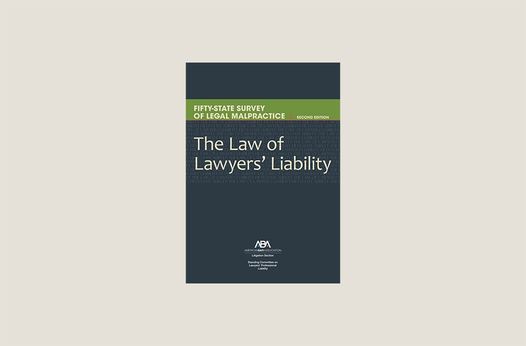
Hinshaw Attorneys Contribute Rhode Island Chapter in ABA Legal Malpractice Survey

