
ACA International Continues Setting Precedent Regarding Autodialers: Second and Third Circuits Follow Suit in Adopting a Narrowed Definition
2 min read
Jul 11, 2018
The Second Circuit, in King v. Time Warner Cable, Inc., and the Third Circuit, in Dominguez v. Yahoo!, Inc., relied upon the D.C. Circuit's decision in ACA International v. FCC in limiting the definition of an autodialer under the Telephone Consumer Protection Act. Dominguez found that Yahoo's text message system did not fit the definition of autodialer, while King emphasized that only a device that currently has the ability to perform autodialing functions can qualify as an autodialer system.
In a 2015 Declaratory Ruling, the Federal Communications Commission broadened the meaning of an autodialer to encompass devices that had "the latent or potential capacity to store or produce telephone numbers using a random or sequential number generator, and to dial those numbers." The D.C. Circuit overruled the FCC's definition in ACA International, finding that the definition was unreasonably overbroad and even noting that under FCC's interpretation any smartphone could be considered an autodialer.
In Dominguez, the Third Circuit followed the reasoning of ACA International and found that the equipment Yahoo used to send text messages—its "Email SMS Service"—did not meet the definition of an autodialer, because Yahoo's service sent messages "only to numbers that had been individually and manually inputted into its system by a user." While the panel acknowledged that the plaintiff was subjected to "great annoyance," receiving tens of thousands of text messages from Yahoo under the system, the court ultimately decided that "the TCPA's prohibition on autodialers is not the proper means of redress" because the previous owner of the plaintiff's cellphone number manually inputted the telephone number into Yahoo's system.
Three days after the Third Circuit issued Dominguez, the Second Circuit likewise followed ACA International to vacate a lower court's decision that relied on the overturned 2015 FCC Declaratory Ruling. In King, the Second Circuit held that the definition of an autodialer includes those devices that "currently have features that enable it to perform the functions of an autodialer – whether or not those features are actually in use during the offending call – [rather than] a device that can perform those functions only if additional features are added." A device with the potential to be an autodialer by virtue of added features or programming does not meet the definition of an autodialer under the TCPA. Only devices that currently have the capability to perform autodialing functions qualify as an autodialer system. In deciding King, the Second Circuit agreed with the D.C. Circuit that the definition under the FCC Ruling is overbroad. The Second Circuit even dove into the TCPA's legislative history, ultimately concluding that the term "capacity" in the TCPA's definition of a qualifying autodialer should be interpreted to refer to a device's current functions, absent any modifications to the devices hardware or software. Under this definition, devices whose autodialing features could be activated "by the equivalent of the simple flipping of a switch" would be included.
The Second and Third Circuit's decisions demonstrate the significance of ACA International to TCPA litigation and how it has helped solidify the now narrowed definition and meaning of autodialer.
Featured Insights
In The News
Oct 21, 2026
Scott Seaman Says Walmart Ruling is an "Aberration" in the Opioid Insurance Battle

Event
October 21 – 23, 2026
D.L. Morriss Presents on International Banking Litigation and AI Regulation

Press Release
Oct 20, 2026
Seasoned Litigator Joins Hinshaw's Aviation and Aerospace Team in Chicago

In The News
Oct 21, 2026
Scott Seaman Says Walmart Ruling is an "Aberration" in the Opioid Insurance Battle
Event
October 21 – 23, 2026
D.L. Morriss Presents on International Banking Litigation and AI Regulation
Press Release
Oct 20, 2026
Seasoned Litigator Joins Hinshaw's Aviation and Aerospace Team in Chicago

Consumer Crossroads: Where Financial Services and Litigation Intersect
Oct 19, 2026
Refile, Repeat: Ohio’s Savings Statute Allows for Unlimited Bites of a Time-Barred Claim

Consumer Crossroads: Where Financial Services and Litigation Intersect
Oct 16, 2026
Key Takeaways from the 2026 ACVL Conference for the Auto Finance Industry

Press Release
Oct 16, 2026
Nia Binns Re-Appointed Health and Wellness Committee Co-Chair of the BWLA

In The News
Oct 16, 2026
Jennifer Driscoll Explains How Bond Request Spurred AG Settlement in Paramount Merger

Consumer Crossroads: Where Financial Services and Litigation Intersect
Oct 15, 2026
OCC Releases Debanking Report on Largest Banks; CFPB Announces Follow-On Initiative
In The News
Oct 14, 2026
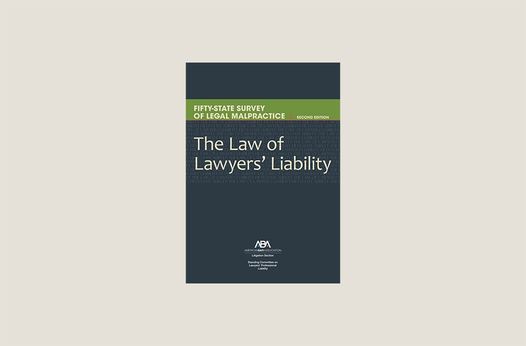
Hinshaw Attorneys Contribute Rhode Island Chapter in ABA Legal Malpractice Survey

