
NLRB Provides Section 7 Guidance to Employers Regarding Drafting of Arbitration Agreements
There is an ongoing tension between the National Labor Relations Board (the "Board") and employers who seek to expand the use of an arbitration forum to resolve employment disputes. The U.S. Supreme Court has continued to endorse the idea that arbitration is both an important part of national labor policy and a reasonable alternative to litigation in court for employment-related disputes. As the Board issues new opinions and interprets guidance from the Supreme Court, employers are in a position to gain better insight and avoid problematic drafting mistakes in arbitration agreements.
Take, for instance, Beena Beauty Holding, Inc., 368 NLRB No. 91, where the employer, Beena Beauty, maintained an arbitration agreement which never referred specifically to the National Labor Relations Act (NLRA) or the right to file charges before the Board, but the policy did state broadly that the arbitration provision applied generally to all employment claims, and only expressly excluded unemployment and worker's compensation claims. The Board addressed the issue of whether the arbitration agreement used by Beena Beauty unlawfully restricted access to the Board and its processes. Ultimately, the Board found an arbitration provision did unlawfully interfere with employees' Section 7 rights, because a reasonable employee might construe it as restricting access to the Board's processes.
In deciding Beena Beauty, the Board discussed its decision in Boeing, 365 NLRB 154, noting that a facially-neutral rule or policy must be evaluated in such a way as to strike a proper balance between the asserted business justifications for the rule, and the intrusion on employee rights in light of the NLRA and its policies. Under this rule—and consistent with Lutheran Heritage Village-Livonia, 343 NLRB 646 (2004)—agreements explicitly prohibiting filing claims with the NLRB are unlawful. In this case, however, there was no express prohibition on any Board filing. Therefore, the Board proceeded to analyze whether the language would lead a reasonable employee to believe they were prevented or restricted from filing charges with the Board. In doing so, the Board commented favorably on agreements which include appropriate savings clauses which operate to allow any current or former employee to file a charge with the Board.
When drafting arbitration provisions, even for workplaces which are not unionized, employees should retain the ability to file unfair labor practice charges with the Board and participate in Board administrative proceedings. Language expressly stating that employees will have rights to go to the Board, and file charges if appropriate, increases the likelihood that an employer's arbitration agreement will pass muster before the Board.
Featured Insights

In The News
Oct 21, 2026
Scott Seaman Says Walmart Ruling is an "Aberration" in the Opioid Insurance Battle

Event
October 21 – 23, 2026
D.L. Morriss Presents on International Banking Litigation and AI Regulation

Press Release
Oct 20, 2026
Seasoned Litigator Joins Hinshaw's Aviation and Aerospace Team in Chicago


In The News
Oct 21, 2026
Scott Seaman Says Walmart Ruling is an "Aberration" in the Opioid Insurance Battle
Event
October 21 – 23, 2026
D.L. Morriss Presents on International Banking Litigation and AI Regulation
Press Release
Oct 20, 2026
Seasoned Litigator Joins Hinshaw's Aviation and Aerospace Team in Chicago

Consumer Crossroads: Where Financial Services and Litigation Intersect
Oct 19, 2026
Refile, Repeat: Ohio’s Savings Statute Allows for Unlimited Bites of a Time-Barred Claim

Consumer Crossroads: Where Financial Services and Litigation Intersect
Oct 16, 2026
Key Takeaways from the 2026 ACVL Conference for the Auto Finance Industry

Press Release
Oct 16, 2026
Nia Binns Re-Appointed Health and Wellness Committee Co-Chair of the BWLA

In The News
Oct 16, 2026
Jennifer Driscoll Explains How Bond Request Spurred AG Settlement in Paramount Merger

Consumer Crossroads: Where Financial Services and Litigation Intersect
Oct 15, 2026
OCC Releases Debanking Report on Largest Banks; CFPB Announces Follow-On Initiative
In The News
Oct 14, 2026
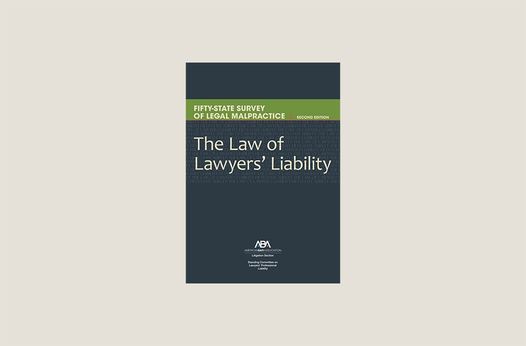
Hinshaw Attorneys Contribute Rhode Island Chapter in ABA Legal Malpractice Survey

