
Ohio Court Rules a Party Cannot Circumvent the Statutory Timeframe to Vacate an Arbitration Award
Yesterday, the Ohio Eighth Appellate District found that a party could not circumvent the statutory timeframe to seek to vacate an arbitration award by the use of civil rules of procedure. The decision affirms that Ohio courts have limited authority to vacate an arbitrator’s award.
What Happened?
In December 2024, the appellant sought to confirm an arbitration award in accordance with Ohio’s Arbitration Act, R.C. § 2711 et. seq. Despite the docket reflecting service of the motion, none of the appellees appeared or opposed the request. The award was confirmed, and in February 2025, the clerk issued a certificate of judgment.
In response, a little more than three months after the appellant delivered the award to the appellees, the appellees appeared and sought to vacate the award under Ohio’s Arbitration Act as well as Ohio Civ. R. 60(B). Appellant opposed the motion in part on the grounds that the appellee’s attempt to vacate was untimely. Despite this, the trial court granted the appellee’s motion and vacated the arbitration award without issuing an opinion. Appellant then appealed.
How Did the Court Rule?
On appeal, a divided Eighth Appellate District found that the appellees had failed to timely seek to vacate the arbitration award and reversed the trial court’s decision. As the Court noted, Ohio law favors arbitration with the result that courts have limited authority to vacate an arbitrator’s award. Not only that, but Ohio’s Arbitration Act provides for a short, specific timeframe to challenge such an award:
[a]fter an award in an arbitration proceeding is made, any party to the arbitration may file a motion in the court of common pleas for an order vacating, modifying, or correcting the award[.]” The section further provides that the notice of a motion to vacate “must be served upon the adverse party or his attorney within three months after the award is delivered to the parties in interest, as prescribed by law for service of notice of a motion in an action.”
R.C. § 2711.13.
As the Court noted, the timing requirement is both mandatory and jurisdictional, and if an application is filed after this time period, “the trial court lacks jurisdiction.” Galion v. Am. Fedn. & Mun. Emps., Ohio Counsel 8, AFL-CIO, Local No. 2243, 71 Ohio St.3d 620, 622 (1991). While the appellees argued they had sought to vacate the award within three months of “notice,” the Court focused on when the award was actually “delivered” in order to determine that their attempt to vacate was untimely.
The Court further found that the appellees could not resurrect an otherwise untimely attempt to vacate an arbitration award by seeking relief from judgment under Civ. R. 60(B): “R.C. Chapter 2711 provides the exclusive statutory remedy which parties must use in appealing arbitration awards to the courts of common pleas.” Thus, a Civ. R. 60(B) motion that “…contains arguments for vacating the arbitration award, [] is an improper use of Civ.R. 60(B) because these arguments should have and could have only been asserted in a timely motion filed pursuant to R.C. 2711.13. A Civ.R. 60(B) motion may not be used to circumvent the statutory jurisdictional requirements of R.C. 2711.13.”
What Does it Mean?
In arbitration, timing is everything. Just like under the Federal Arbitration Act, Ohio’s Arbitration Act has very strict and short time frames to vacate or modify an arbitration award. Failure to do so in a timely manner will result in the award being confirmed.
Authors

Featured Insights

Consumer Crossroads: Where Financial Services and Litigation Intersect
Oct 16, 2026
Key Takeaways from the 2026 ACVL Conference for the Auto Finance Industry

Press Release
Oct 16, 2026
Nia Binns Re-Appointed Health and Wellness Committee Co-Chair of the BWLA

In The News
Oct 16, 2026
Jennifer Driscoll Explains How Bond Request Spurred AG Settlement in Paramount Merger





Consumer Crossroads: Where Financial Services and Litigation Intersect
Oct 16, 2026
Key Takeaways from the 2026 ACVL Conference for the Auto Finance Industry
Press Release
Oct 16, 2026
Nia Binns Re-Appointed Health and Wellness Committee Co-Chair of the BWLA
In The News
Oct 16, 2026
Jennifer Driscoll Explains How Bond Request Spurred AG Settlement in Paramount Merger

Consumer Crossroads: Where Financial Services and Litigation Intersect
Oct 15, 2026
OCC Releases Debanking Report on Largest Banks; CFPB Announces Follow-On Initiative
In The News
Oct 14, 2026
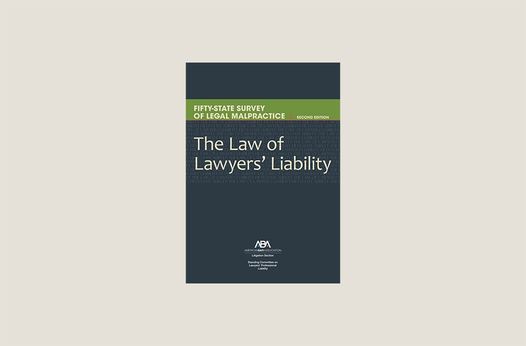
Hinshaw Attorneys Contribute Rhode Island Chapter in ABA Legal Malpractice Survey

Privacy, Cyber & AI Decoded Alert
Oct 13, 2026
California’s SB 690 Removes Some CIPA Claims, But Privacy and Legal Risks Remain

Press Release
Oct 12, 2026
Two Hinshaw Partners Reappointed to the NYC Bar Association’s Consumer Affairs Committee

