
The Lawyers' Lawyer Newsletter - Recent Developments in Risk Management - May 2015 Edition
Lawyers' Lawyer Newsletter | 2 min read
May 5, 2015
Download or read the complete newsletter here: The Lawyers' Lawyer Newsletter - May 2015
- Conflict of Interest — Disqualification — The Importance of Timely Ethical Screening Before Undertaking the Representation
- Lawyers Professional Liability Insurance — Notice Provision — Consequences of Failure to Provide Adequate Detail
- Client On-Line Reviews of Lawyers' Services — Right of Response? — Application of "Self-Defense" Exception to Rule of Professional Conduct 1.6
- Social Networking — Personal Profiles on LinkedIn — Application of the Rules of Professional Conduct
Conflict of Interest — Disqualification — The Importance of Timely Ethical Screening Before Undertaking the Representation
Signature MD, Inc. v. MDVIP, Inc., Case No. CV 14-5453 (C.D. Cal. Jan. 20, 2015)
Risk Management Issue: A new matter comes in requiring immediate attention, but a conflict check reveals a prior representation of the adverse party. To the extent that screening may avoid or reduce the risk of disqualification, how quickly must a law firm implement the ethical screen?
Lawyers Professional Liability Insurance — Notice Provision — Consequences of Failure to Provide Adequate Detail
Illinois State Bar Ass'n Mut. Ins. Co. v. Beeler Law, P.C., 2015 IL App (1st) 140790-U, 2015 WL 1407310 (Ill. App. Ct. Mar. 25, 2015)
Risk Management Issue: What are the consequences of failing to provide detailed information to the insurer when reporting claims?
Client On-Line Reviews of Lawyers' Services — Right of Response? — Application of "Self-Defense" Exception to Rule of Professional Conduct 1.6
New York State Bar Association Committee on Professional Ethics Opinion 1032, Responding to a former client's critical commentary on a website (Oct. 30, 2014)
Pa. Bar Assoc. Formal Op. 2014-300, Ethical Obligations for Attorneys Using Social Media, 2014
Risk Management Issue: Can a lawyer respond to a client's (or a former client's) critical online review of legal services by rebutting the accusations using the client's confidential information?
Social Networking — Personal Profiles on LinkedIn — Application of the Rules of Professional Conduct
New York County Lawyers' Association Professional Ethics Committee Formal Opinion 748, The ethical implications of attorney profiles on LinkedIn, Mar. 10, 2015
Pa. Bar Assoc. Formal Op. 2014-300, Ethical Obligations for Attorneys Using Social Media, 2014
Risk Management Issue: How do the rules of professional conduct regulate the contents of lawyers' personal profiles on LinkedIn?
Download or read the complete newsletter here: The Lawyers' Lawyer Newsletter - May 2015
This newsletter has been prepared by Hinshaw & Culbertson LLP to provide information on recent legal developments of interest to our readers. It is not intended to provide legal advice for a specific situation or to create an attorney-client relationship.
Featured Insights

Press Release
Nov 13, 2026
Hinshaw Advises Client Safe Harbor Capital Partners in $44 Million Financing

Event
Nov 13, 2026

In The News
Nov 12, 2026
Spencer Kook Authors Article Providing a Claims Manager’s Guide to Class Action Exposure
Press Release
Nov 13, 2026
Hinshaw Advises Client Safe Harbor Capital Partners in $44 Million Financing
Event
Nov 13, 2026
In The News
Nov 12, 2026
Spencer Kook Authors Article Providing a Claims Manager’s Guide to Class Action Exposure

In The News
Nov 12, 2026
Mitch Chargo Discusses Cannabis M&A Implications in a Post-Rescheduling Landscape

Webinar
Nov 12, 2026
Michael Adams Presents on Navigating Ethics in the Digital Age

Event
Nov 12, 2026
Cathy Mulrow-Peattie Discusses AI and Supply Chain Cybersecurity

Healthcare Alert
Nov 11, 2026
Illinois Enacts 340B Contract Pharmacy Protections: 7 Steps Covered Entities Should Take
In The News
Nov 10, 2026
Brian Turetsky Examines How NYC’s Proposed POWER Act Could Expand Private UDAAP Claims

In The News
Nov 9, 2026
Kate Schnake Examines Unlawful Discrimination vs. Legitimate Advocacy in Jury Selection
Press Release
Nov 6, 2026
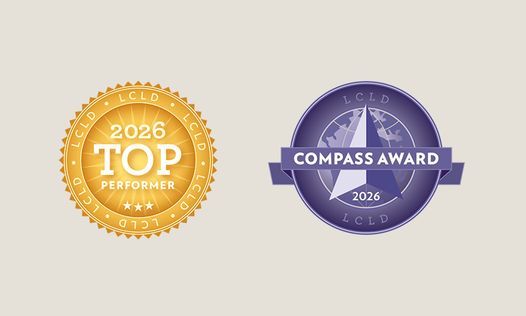
Hinshaw Recognized by the LCLD as a 2026 Compass Award Winner and Top Performer

Consumer Crossroads: Where Financial Services and Litigation Intersect
Nov 5, 2026
FDIC Proposes State Bank Preemption Parity Rule Regarding Host State Laws

