
Client Success: Portfolio Recovery Associates Prevails at Seventh Circuit
Secures Recovery of Legal Costs and a Major Reduction in Plaintiff's Requested Attorneys' Fees
Press Release | 2 min read
May 29, 2019
Hinshaw client Portfolio Recovery Associates (PRA) recently secured a win at the U.S. Court of Appeals for the Seventh Circuit in a case involving Fair Debt Collection Practices Act (FDCPA) and Fair Credit Reporting Act (FCRA) claims. The Court's affirmation of the trial court's ruling with regard to costs and attorneys' fees is an excellent example of the usefulness of strategic FRCP Rule 68 offers of judgement when defending against such claims. Hinshaw's David Schultz represented PRA at trial and on appeal, with assistance from Raven Burke Mackey, Jennifer Weller and Steve Swofford.
At issue were claims by a debtor alleging violations of the FDCPA and FCRA. Within a month of the filing of the lawsuit, PRA invoked Rule 68 in making a formal offer to settle, and subsequently made two additional Rule 68 offers of judgement. The plaintiff never responded to these settlement offers, and later rejected a final offer to settle all claims, costs and attorneys' fees for $25,000. At trial, the plaintiff prevailed on both his claims, but because the jury determined he had sustained no actual damages, his total recovery was limited to $1,000 in statutory damages.
Plaintiff's legal counsel then sought to recover $187,410 in attorneys' fees, plus costs. First, the trial court awarded PRA $3,064 for expenses incurred after its final Rule 68 offer, since the plaintiff obtained a judgment less than the final Rule 68 offer of judgment. Then, turning to the reasonableness of the plaintiff's requested attorneys' fees, the court cited the plaintiff's decision to reject PRA's final Rule 68 offer, which was more than three times the amount of the plaintiff's eventual recovery. The court determined that only the hours worked by plaintiff's counsel prior to PRA's final Rule 68 offer were reasonable. It rejected as unreasonable all subsequent hours worked, including those spent preparing for and conducting the trial, and awarded $10,875 using the lodestar method.
The plaintiff appealed to the Seventh Circuit. Noting that "sometimes settling a case is the only course that makes sense" and that "this case provides a good example," the panel held that the trial court did not abuse its discretion in rejecting the plaintiff's request for $187,410 in fees and instead awarding $10,875.
This case illustrates how a well-calculated Rule 68 offer can place significant litigation risks on a plaintiff. It was a risk the plaintiff was willing to take in this case, and the Seventh Circuit's ruling is the result.
The case is Isaac Paz v. Portfolio Recovery Associates, LLC (7th Cir.), No. 17-3259.


Related Capabilities
Related Locations
Featured Insights
Press Release
Sep 18, 2026
Paris Glazer Named to Chicago Daily Law Bulletin’s 2026 40 Attorneys Under Forty

Consumer Crossroads: Where Financial Services and Litigation Intersect
Sep 17, 2026
Federal and State Regulators Continue Crackdown on Junk Fees

Press Release
Sep 17, 2026
Defense Verdict Reduces $134 Million Demand to $2 Million in Catastrophic Motorcycle Injury Case
Press Release
Sep 18, 2026
Paris Glazer Named to Chicago Daily Law Bulletin’s 2026 40 Attorneys Under Forty
Consumer Crossroads: Where Financial Services and Litigation Intersect
Sep 17, 2026
Federal and State Regulators Continue Crackdown on Junk Fees
Press Release
Sep 17, 2026
Defense Verdict Reduces $134 Million Demand to $2 Million in Catastrophic Motorcycle Injury Case
Insights for Insurers Alert
Sep 16, 2026
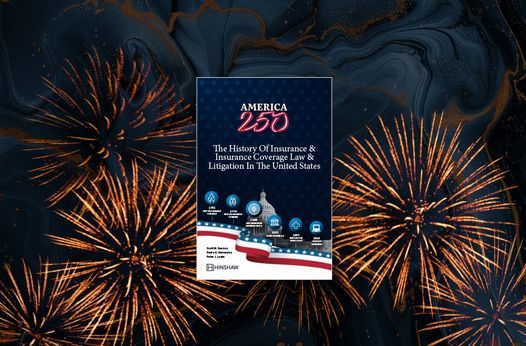
America 250: The Nation’s Unique Contributions to Insurance Coverage Law and Litigation
In The News
Sep 15, 2026
Lucy Wang Discusses the California Insurance Commissioner’s Role in Protecting Consumers

Press Release
Sep 10, 2026
Hinshaw Attorneys Recognized as 2027 Lexology Index Thought Leaders: USA

In The News
Sep 10, 2026
Nicholas Ajello and Gregory Emry Analyze FAA’s Proposed BVLOS Drone Regulations

Consumer Crossroads: Where Financial Services and Litigation Intersect
Sep 9, 2026
“Play Now, Arbitrate Later”—“Not So Fast,” Ninth Circuit Says
In The News
Sep 9, 2026
Jennifer Driscoll Discusses “Patchwork” of Laws Targeting Personalized Pricing

Employment Law Observer
Sep 8, 2026
Five Workplace Issues Every Employer Should Address Before They Become a Costly Lawsuit

Press Release
Sep 8, 2026
Jim Sandy Appointed Chair of ABA Debt Collection and Bankruptcy Subcommittee

