
U.S. Senate Bill Would Provide Safe Harbor for Insurers That Insure Cannabis-Related Businesses Operating in Compliance With State and Local Law
Insights for Insurers Alert | 2 min read
Mar 25, 2021
A bipartisan group of U.S. Senators—Rand Paul (R-KY), Robert Menendez (D-NJ), and Jeffrey Merkley (R-KY)—recently introduced the Clarifying Law Around Insurance of Marijuana Act (CLAIM Act). The proposed legislation is intended to encourage insurance for members of the cannabis industry operating in compliance with state and local law.
In recent years, cannabis has been legalized for medicinal use in 35 states and 16 states have legalized adult recreational use. Remarkably, many cannabis businesses were even defined as an "essential business" and exempt from many state COVID-19-related shut down orders.
Nonetheless, cannabis remains a Schedule 1 substance under the Controlled Substances Act of 1970. As a general matter, under federal law it is illegal to manufacture, sell, or distribute cannabis. It also is illegal under federal law to, among other things, knowingly distribute equipment or materials for the manufacturing of cannabis and, under some circumstances, to engage or attempt to engage in monetary transactions involving cannabis.
Notwithstanding the legalization of cannabis businesses under the laws of some states, in view of its illegal status under federal law, the supremacy of federal law, and the potential for criminal enforcement, insurers understandably have been reluctant to insure cannabis businesses. In some instances, the inability to obtain insurance may limit or discourage persons or entities from engaging in cannabis businesses. In states requiring cannabis business to obtain insurance—such as general liability, property, or worker's compensation coverages—as a requirement for securing licensing to operate the business, the inability to obtain insurance coverage precludes operating a cannabis business legally under state law.
Generally, the CLAIM Act would prohibit federal agencies from penalizing or discouraging a company in the business of insurance from transacting with cannabis-related businesses that are operating in compliance with state and local law. It expressly provides that insurance businesses may not be held liable pursuant to any federal law or regulation solely for engaging in the business of insurance with a cannabis-related legitimate business. Traditional insurers will no doubt examine the language of the bill to determine whether it affords sufficient protection and is broad enough to cover all aspects of their businesses to safely permit the insuring of cannabis businesses. It remains to be seen whether the bill will have sufficient support to move forward in light of the numerous, current legislative priorities.
Related People
Related Capabilities
Featured Insights
Event
October 21 – 23, 2026
D.L. Morriss Presents on International Banking Litigation and AI Regulation
Press Release
Oct 20, 2026
Seasoned Litigator Joins Hinshaw's Aviation and Aerospace Team in Chicago

Privacy, Cyber & AI Decoded Alert
Oct 20, 2026
Eight States Sue OpenAI for Harming Minors



Event
October 21 – 23, 2026
D.L. Morriss Presents on International Banking Litigation and AI Regulation
Press Release
Oct 20, 2026
Seasoned Litigator Joins Hinshaw's Aviation and Aerospace Team in Chicago
Privacy, Cyber & AI Decoded Alert
Oct 20, 2026
Eight States Sue OpenAI for Harming Minors

Consumer Crossroads: Where Financial Services and Litigation Intersect
Oct 19, 2026
Refile, Repeat: Ohio’s Savings Statute Allows for Unlimited Bites of a Time-Barred Claim

Consumer Crossroads: Where Financial Services and Litigation Intersect
Oct 16, 2026
Key Takeaways from the 2026 ACVL Conference for the Auto Finance Industry

Press Release
Oct 16, 2026
Nia Binns Re-Appointed Health and Wellness Committee Co-Chair of the BWLA

In The News
Oct 16, 2026
Jennifer Driscoll Explains How Bond Request Spurred AG Settlement in Paramount Merger

Consumer Crossroads: Where Financial Services and Litigation Intersect
Oct 15, 2026
OCC Releases Debanking Report on Largest Banks; CFPB Announces Follow-On Initiative
In The News
Oct 14, 2026
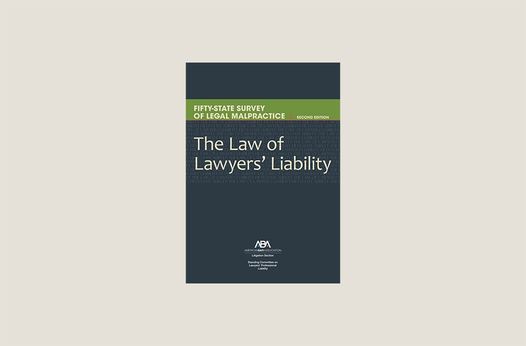
Hinshaw Attorneys Contribute Rhode Island Chapter in ABA Legal Malpractice Survey

