
H-1B Cap Season is Approaching Quickly!
Insights for Employers Alert | 2 min read
Jan 4, 2023
With the H-1B cap pre-registration period quickly approaching, now is the appropriate time to review your hiring needs, identify those individuals you intend to sponsor for H-1B employment authorization, and gather necessary documentation.
Background
H-1B employment authorization is one of the most highly utilized and sought-after temporary work authorizations in the United States and allows employers to hire foreign nationals to perform employment in jobs that are considered to be "specialty" occupations. A specialty occupation is defined as an occupation requiring at least a Bachelor's degree or equivalent to perform the duties of the position in the U.S. In its current form, the H-1B employment authorization is limited to 65,000 new H-1B petition approvals per year, plus an additional 20,000 H-1B authorizations that are set aside for individuals with Master's degrees from U.S. universities. Employment start dates for H-1B authorizations occur on October 1 each year, which corresponds with the government fiscal year. Individuals currently working for U.S. employers in H-1B status are not subject to this numerical limitation when a new employer files a petition to change the sponsoring employer for their H-1B employment authorization.
The Pre-Registration Period
In January 2020, United States Citizenship and Immigration Services (USCIS) introduced an H-1B "pre-registration period" from March 1-March 20 to allow employers to register their interest in filing an H-1B petition on behalf of a specific employee. Once employers have registered for this H-1B lottery, USCIS runs a random selection process or "lottery" to determine which employers will be permitted to file H-1B petitions on behalf of their prospective H-1B employees. USCIS received over 300,000 registrations for the 85,000 spots in March of 2021 and over 480,000 registrations for the March 2022 registration period. Due to the scarcity of these H-1B authorizations, preparing well in advance for pre-registration is crucial, and it is not too soon to start the preparation process.
H-1B pre-registration for March 2023
The H-1B filing pre-registration period allows employers to register their individual H-1B submissions online with one select foreign national applicant. Multiple filings by the same employer for one foreign national will disqualify the submission. It is important to note that more than one employer may file an H-1B registration for one foreign national.
Exemptions from the H-1B Cap
Certain employers are exempt from the H-1B numerical limitations and therefore do not need to go through the pre-registration process. These employers include the following:
- governmental research organizations,
- non-profit research organizations, institutes of higher education, and
- non-profit organizations affiliated with institutions of higher education
Please feel free to contact our offices for assistance in assessing your need and managing the H-1B registration process.
Related People

Related Capabilities
Featured Insights

Consumer Crossroads: Where Financial Services and Litigation Intersect
Oct 15, 2026
OCC Releases Debanking Report on Largest Banks; CFPB Announces Follow-On Initiative





Consumer Crossroads: Where Financial Services and Litigation Intersect
Oct 15, 2026
OCC Releases Debanking Report on Largest Banks; CFPB Announces Follow-On Initiative
In The News
Oct 14, 2026
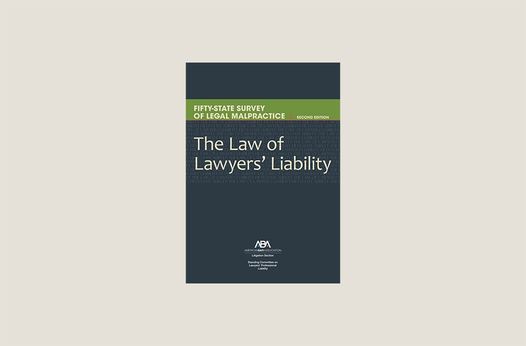
Hinshaw Attorneys Contribute Rhode Island Chapter in ABA Legal Malpractice Survey

Privacy, Cyber & AI Decoded Alert
Oct 13, 2026
California’s SB 690 Removes Some CIPA Claims, But Privacy and Legal Risks Remain

Press Release
Oct 12, 2026
Two Hinshaw Partners Reappointed to the NYC Bar Association’s Consumer Affairs Committee
Press Release
Oct 9, 2026
Adam Topel Appointed Chair-Elect of the ABA’s TIPS Appellate Advocacy Committee

Press Release
Oct 8, 2026
Technology Service Corporation Closes on Acquisition by Blackstone-Backed Purchaser

Employment Law Observer
Oct 8, 2026
“We Didn’t Know” is No Longer an Employer Defense for Religious Accommodation Claims Under Title VII

