
Who Invited You? OSHA Reverses Itself on Fairfax Memo
OSHA recently announced it will no longer bring union representatives to inspections of non-unionized workplaces. As a result, barring a designation by an employee (which I'll discuss further below), non-unionized employers no longer have reason to fear that an OSHA compliance officer will appear at the door accompanied by a union representative on an inspection or walk-around.
To provide some background, back in February 2013, OSHA announced in what has come to be known as the infamous "Fairfax Memo," that it had the right to invite union advocates to inspections of non-union work sites. That right flowed from its tenuous interpretation of language in the Occupational Safety and Health Act permitting OSHA to invite a union representative as a “representative authorized by the employer’s employees.” 29 U.S.C. § 657 (e).
That interpretation by OSHA has always been interpreted by employers and employer associations to be a “stretch,” especially when one considers that in a non-unionized work setting, the employees have not selected any union as its exclusive bargaining representative. The National Federation of Independent Businesses challenged OSHA on the Fairfax Memo and filed suit in the United States District Court for the Northern District of Texas. In response to the lawsuit, and perhaps also in response to change in control of the executive branch of government, OSHA recently notified the Federation that the Fairfax Memo had been rescinded, meaning OSHA is no longer allowed to bring union representatives on inspections and walk-arounds of non-unionized work settings. As a result of that action by OSHA, the Federation filed a motion to voluntarily dismiss its case.
Employers should be aware, however, that there are avenues for employees to select a representative to assist them in a walk-around or to act as their advocate in an inspection. In some cases, such an action might be very appropriate. For example, in a workplace populated by individuals who speak a variety of languages and not necessarily English, the presence of an experienced advocate might be something the employees would want. Another example would be a workplace where the employees are relatively unsophisticated in safety techniques. In those instances, the employees can exercise their prerogative to name an advocate or a designee to assist them and OSHA in the walk-around. However, that decision should be left to the employees, and OSHA compliance officers should not be unilaterally deciding to invite union members on walk-arounds or safety inspections. The good news for employers is that OSHA is no longer assuming it has that independent right.
If you would like more information about OSHA inspections or OSHA generally, please contact Tom Luetkemeyer or your regular Hinshaw lawyer.
Featured Insights

Consumer Crossroads: Where Financial Services and Litigation Intersect
Oct 16, 2026
Key Takeaways from the 2026 ACVL Conference for the Auto Finance Industry

Press Release
Oct 16, 2026
Nia Binns Re-Appointed Health and Wellness Committee Co-Chair of the BWLA

In The News
Oct 16, 2026
Jennifer Driscoll Explains How Bond Request Spurred AG Settlement in Paramount Merger


Consumer Crossroads: Where Financial Services and Litigation Intersect
Oct 16, 2026
Key Takeaways from the 2026 ACVL Conference for the Auto Finance Industry
Press Release
Oct 16, 2026
Nia Binns Re-Appointed Health and Wellness Committee Co-Chair of the BWLA
In The News
Oct 16, 2026
Jennifer Driscoll Explains How Bond Request Spurred AG Settlement in Paramount Merger

Consumer Crossroads: Where Financial Services and Litigation Intersect
Oct 15, 2026
OCC Releases Debanking Report on Largest Banks; CFPB Announces Follow-On Initiative
In The News
Oct 14, 2026
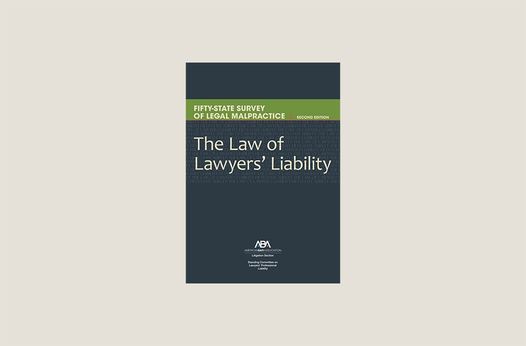
Hinshaw Attorneys Contribute Rhode Island Chapter in ABA Legal Malpractice Survey

Privacy, Cyber & AI Decoded Alert
Oct 13, 2026
California’s SB 690 Removes Some CIPA Claims, But Privacy and Legal Risks Remain

Press Release
Oct 12, 2026
Two Hinshaw Partners Reappointed to the NYC Bar Association’s Consumer Affairs Committee

