
U.S. Supreme Court Issues Ground-Breaking Decision on Religious Accommodations in the Workplace
On June 29, 2023, the U.S. Supreme Court issued Groff v. Dejoy, a ground-breaking decision that changes a long-recognized standard for religious accommodations in the workplace. This new interpretation effectively expands an employer's obligation to provide religious accommodations. For years, appellate courts recognized an employer's authority to reject a religious accommodation merely by showing it creates a de minimus burden on the employer or co-workers. With this decision, the Court rejected the routine application of the de minimus standard in favor of one where the employer must show the "accommodation would result in substantial increased costs in relation to the conduct of its particular business" if rejected. Now an employer must make an individualized assessment as to the impact of the accommodation, taking into account the employer’s nature, size, and resources. Even where the requested accommodation would result in substantially increased costs, the employer is obligated to evaluate the feasibility of alternative accommodations.
Here, an Evangelical Christian employee requested a religious accommodation that would exempt him from working on the Sabbath. The employer rejected the accommodation, contending that it would force others to work overtime and violate work rules, thus creating more than de minimus burden. The appellate court found in favor of the employer, but, voting 9-0, the Supreme Court rejected the basis for its conclusion. Writing for the majority, Justice Alito rejected the de minimus standard and explained that under the newly announced interpretation, when faced with such an accommodation request, it would not be enough for an employer to conclude that forcing other employees to work overtime would constitute an undue hardship. Instead, consideration of other options, such as voluntary shift swapping, would also be necessary before it lawfully could reject the accommodation.
In rejecting the de minimus standard, the Court looked to the language of Title VII and explained that the statute "requires employers to accommodate the religious practice of their employees unless doing so would impose an 'undue hardship on the conduct of the employer's business." The Court focused on the meaning of the term "undue hardship," insisting the lower courts were wrong to interpret it as calling for a "de minimus" or very low standard. The Court reasoned that this widespread misinterpretation of "undue hardship" arose from one line in a 1977 religious discrimination case decided by the Court that was taken out of context by lower courts.
While the Court's discussion of the religious accommodation standard seems more in line with the way disability accommodations are evaluated under the Americans with Disabilities Act, the Court declined to adopt the ADA cases as interpretive guidance when evaluating religious accommodations. Instead, the Court found it "appropriate to leave the context-specific application…to the lower courts in the first instance."
The Court also commented approvingly on prior EEOC guidance, which cautioned against the rejection of religious accommodations merely due to administrative costs involved in reworking schedules, infrequent or temporary payment of premium wages for a substitute, and voluntary substitutes and swaps when they are not contrary to a bona fide seniority system.
As a result of this opinion, employers may not dismiss an accommodation request if it creates more than a de minimus burden. Further, unlike the prior standard, employers must take affirmative steps to evaluate other feasible options to accommodate the employee's religion, even if the specific accommodation requested creates a substantial increased cost to their particular business. Employers should be aware that while the newly defined standard appears very similar to the ADA standard for disability accommodations, the Court declined to use ADA precedent to interpret the contours of religious accommodations. It did not compare the ADA to Title VII, in terms of which accommodation standard is more onerous, and employers are advised to stay tuned as the lower courts interpret this newly announced standard.
Featured Insights

In The News
Oct 23, 2026
Michael Dowell Discusses Potential Impact of Proposition 44 on California Community Clinics

Consumer Crossroads: Where Financial Services and Litigation Intersect
Oct 22, 2026
In The News
Oct 23, 2026
Michael Dowell Discusses Potential Impact of Proposition 44 on California Community Clinics
Consumer Crossroads: Where Financial Services and Litigation Intersect
Oct 22, 2026
In The News
Oct 21, 2026
Scott Seaman Says Walmart Ruling is an "Aberration" in the Opioid Insurance Battle
Event
October 21 – 23, 2026
D.L. Morriss Presents on International Banking Litigation and AI Regulation

Press Release
Oct 20, 2026
Seasoned Litigator Joins Hinshaw's Aviation and Aerospace Team in Chicago

Consumer Crossroads: Where Financial Services and Litigation Intersect
Oct 19, 2026
Refile, Repeat: Ohio’s Savings Statute Allows for Unlimited Bites of a Time-Barred Claim

Consumer Crossroads: Where Financial Services and Litigation Intersect
Oct 16, 2026
Key Takeaways from the 2026 ACVL Conference for the Auto Finance Industry
Press Release
Oct 16, 2026
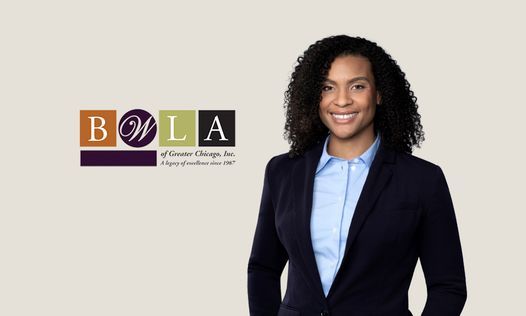
Nia Binns Re-Appointed Health and Wellness Committee Co-Chair of the BWLA

In The News
Oct 16, 2026
Jennifer Driscoll Explains How Bond Request Spurred AG Settlement in Paramount Merger

Consumer Crossroads: Where Financial Services and Litigation Intersect
Oct 15, 2026
OCC Releases Debanking Report on Largest Banks; CFPB Announces Follow-On Initiative

