
Supreme Court Backs Whistleblowing Air Marshall
On January 21st, the Supreme Court affirmed a former air marshal's right to whistleblower protection relating to his leaking of air security plans to the media. The 7-2 decision written by Chief Justice John Roberts in the case, Department of Homeland Security v. MacLean, No. 13-894 (U.S. January 21, 2015), represents a rare victory for government whistleblowers who expose dangers to public health or safety.
The case involved Robert MacLean, a former air marshal who flew undercover and armed, to protect passenger flights from potential hijackings. In 2003, the Transportation Security Administration (TSA) decided to reduce overnight flights for air marshals. MacLean conveyed his concerns about this decision to his supervisor and to the DHS Inspector General's Office. MacLean claims his concerns were ignored. As such, MacLean leaked the news to MSNBC. After facing a massive public outcry and backlash in Congress, the TSA reversed course and halted the cutbacks. MacLean was fired three years later when his identity was revealed. MacLean was fired for disclosing "sensitive security information," which violated TSA regulations.
MacLean challenged his dismissal under the Whistleblower Protection Act (the "Act"), which protects federal workers from retaliation if they disclose "a substantial and specific danger to public health or safety." However, an exception exists under the Act for disclosures "specifically prohibited by law." The Court of Appeals for the Federal Circuit, interpreting that exception, ruled that MacLean's disclosure didn't violate a federal law — only a TSA regulation — and that his whistleblowing therefore was protected. The government appealed the case, asking the Supreme Court to overturn the lower court's decision and reinforce TSA's authority, but the Supreme Court upheld the Federal Circuit's decision.
The issue in the case before the Supreme Court, therefore, was whether an agency regulation prohibiting the disclosure of "specific details of aviation security measures" was the sort of exception that Congress was referring to in the Act. Chief Justice Roberts rejected the argument that the word "law" as used in the Act encompassed the regulation violated by MacLean.
Chief Justice Roberts also disagreed with the government’s argument that some regulations should nonetheless count as law because they were "promulgated pursuant to an express congressional directive." He wrote: "[o]utside of this case, however, the government was unable to find a single example of the word 'law' being used in that way." The Chief Justice went on to conclude, "[n]ot a single dictionary definition, not a single statute, not a single case. The government’s interpretation happens to fit this case precisely, but it needs more than that to recommend it."
Justice Sonia Sotomayor, joined by Justice Anthony M. Kennedy, dissented in the case. Justice Sotomayor wrote that the law’s mandate that the TSA "shall proscribe regulations" was enough to exclude MacLean from the protections of the Act.
Featured Insights
In The News
Oct 21, 2026
Scott Seaman Says Walmart Ruling is an "Aberration" in the Opioid Insurance Battle
Event
October 21 – 23, 2026
D.L. Morriss Presents on International Banking Litigation and AI Regulation

Press Release
Oct 20, 2026
Seasoned Litigator Joins Hinshaw's Aviation and Aerospace Team in Chicago


In The News
Oct 21, 2026
Scott Seaman Says Walmart Ruling is an "Aberration" in the Opioid Insurance Battle
Event
October 21 – 23, 2026
D.L. Morriss Presents on International Banking Litigation and AI Regulation
Press Release
Oct 20, 2026
Seasoned Litigator Joins Hinshaw's Aviation and Aerospace Team in Chicago

Consumer Crossroads: Where Financial Services and Litigation Intersect
Oct 19, 2026
Refile, Repeat: Ohio’s Savings Statute Allows for Unlimited Bites of a Time-Barred Claim

Consumer Crossroads: Where Financial Services and Litigation Intersect
Oct 16, 2026
Key Takeaways from the 2026 ACVL Conference for the Auto Finance Industry

Press Release
Oct 16, 2026
Nia Binns Re-Appointed Health and Wellness Committee Co-Chair of the BWLA

In The News
Oct 16, 2026
Jennifer Driscoll Explains How Bond Request Spurred AG Settlement in Paramount Merger

Consumer Crossroads: Where Financial Services and Litigation Intersect
Oct 15, 2026
OCC Releases Debanking Report on Largest Banks; CFPB Announces Follow-On Initiative
In The News
Oct 14, 2026
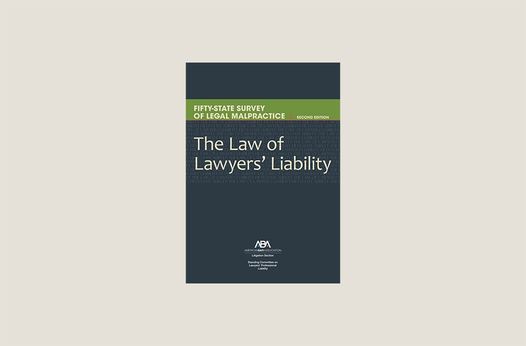
Hinshaw Attorneys Contribute Rhode Island Chapter in ABA Legal Malpractice Survey

