
"Estoppel on Steroids" ‒ Does the Hobbs Act Require the District Court to Accept the FCC's Rule Interpreting an "Unsolicited Advertisement" under the TCPA?
2 min read
Mar 26, 2019
Yesterday, the United States Supreme Court heard oral argument on appeal from the Fourth Circuit's decision issued in PDR Network, LLC v. Carlton & Harris Chiropractic, Inc. The issue is whether a district court must accept the Federal Communication Commission's (FCC) rule interpreting an "unsolicited advertisement" under the Telephone Consumer Protection Act (TCPA). The district court held that PDR Network, LLC did not violate the TCPA when it faxed an unsolicited advertisement to Carlton & Harris Chiropractic for a free Physicians' Desk Reference. In doing so, the district court declined to apply the FCC's 2006 rule that interpreted an unsolicited advertisement under the TCPA to include fax messages that promote goods or services at no cost. On appeal, however, the Fourth Circuit reversed concluding that the district court should have applied the FCC's rule because the Hobbs Act, which establishes judicial review for final orders of certain federal agencies, requires a party to first challenge an agency rule with the respective agency before challenging the rule in court. The Supreme Court is left to decide whether the district court has authority to hear PDR's challenge to the FCC's rule in its defense of this TCPA lawsuit without any prior agency challenge.
At argument, PDR conceded that agencies, including the FCC, provide a notice and opportunity to comment before issuing a rule, but argued that it is unreasonable and unfair to expect a party to challenge an agency's rule before the rule causes it harm. PDR further argued that placing the burden of challenging a statute on a party, then barring it from challenging the rule once the harm—in this case, defending a TCPA violation—occurs, is "estoppel on steroids." Pushing back, Chief Justice Roberts and Justice Sotomayor pointed out that a party may challenge the FCC rule by appealing directly to the FCC, then if denied, the U.S. Court of Appeals. Justices Kagan and Kavanaugh emphasized that under the Hobbs Act, the U.S. Court of Appeals is the court that has exclusive jurisdiction to hear challenges to FCC rules interpreting the TCPA. PDR countered that an agency appeal is a convoluted, lengthy process, and that the Hobbs Act deserves a more nuanced reading than the two justices are affording it.
Carlton & Harris argued that PDR had sufficient opportunity to challenge the FCC's rule when it offered public comment in the Federal Register. Justices Breyer and Gorsuch tested Carlton's asserted logic with a series of realistic hypotheticals where the party could not possibly be aware of the agency rule at the time it was proposed. Justice Breyer posited, "So what happens to a person who wasn't born yet or what happens to a business that wasn't formed yet?" And Justices Alito and Gorsuch intimated that a party cannot reasonably be expected to stay on top of the Federal Register, a journal of nearly 100,000 pages.
We will continue to monitor this case and a decision pivotal to the application of TCPA and, more broadly, to challenges raised in response to FCC interpretations.
Featured Insights
In The News
Oct 21, 2026
Scott Seaman Says Walmart Ruling is an "Aberration" in the Opioid Insurance Battle

Event
October 21 – 23, 2026
D.L. Morriss Presents on International Banking Litigation and AI Regulation

Press Release
Oct 20, 2026
Seasoned Litigator Joins Hinshaw's Aviation and Aerospace Team in Chicago



In The News
Oct 21, 2026
Scott Seaman Says Walmart Ruling is an "Aberration" in the Opioid Insurance Battle
Event
October 21 – 23, 2026
D.L. Morriss Presents on International Banking Litigation and AI Regulation
Press Release
Oct 20, 2026
Seasoned Litigator Joins Hinshaw's Aviation and Aerospace Team in Chicago

Consumer Crossroads: Where Financial Services and Litigation Intersect
Oct 19, 2026
Refile, Repeat: Ohio’s Savings Statute Allows for Unlimited Bites of a Time-Barred Claim

Consumer Crossroads: Where Financial Services and Litigation Intersect
Oct 16, 2026
Key Takeaways from the 2026 ACVL Conference for the Auto Finance Industry

Press Release
Oct 16, 2026
Nia Binns Re-Appointed Health and Wellness Committee Co-Chair of the BWLA

In The News
Oct 16, 2026
Jennifer Driscoll Explains How Bond Request Spurred AG Settlement in Paramount Merger

Consumer Crossroads: Where Financial Services and Litigation Intersect
Oct 15, 2026
OCC Releases Debanking Report on Largest Banks; CFPB Announces Follow-On Initiative
In The News
Oct 14, 2026
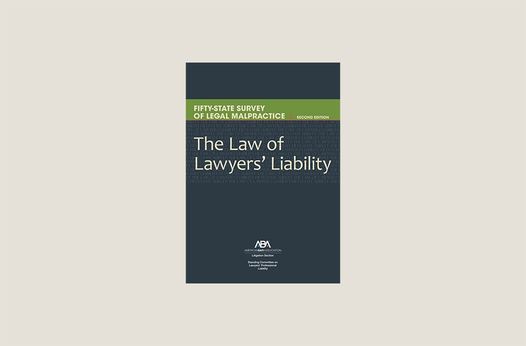
Hinshaw Attorneys Contribute Rhode Island Chapter in ABA Legal Malpractice Survey

