
New York Bar Allows Online Storage of Confidential Client Information With Third Parties
Lawyers for the Profession® Alert
Lawyers for the Profession® Alert | 2 min read
Nov 10, 2010
New York State Bar Committee on Professional Ethics, Opinion 842 (2010)
Brief Summary
A lawyer may store confidential client information online with third parties, provided that he or she stays abreast of relevant changes in the law and technology, and ensures that the third party storage provider also stays abreast of changes in technology.
Complete Summary
The New York State Bar Committee on Professional Ethics opined that lawyers may store confidential client information online with third parties so long as certain precautions are taken. Those precautions include taking measures to protect confidentiality and staying abreast of changes in both technology and relevant law.
Although lawyers need not guarantee that information is secure from unauthorized access, they must exercise reasonable care to prevent such access; this requirement applies to the supervision of third parties. The Committee noted that “reasonable care” may include:
- Ensuring that the online data storage provider has an enforceable obligation to preserve confidentiality and security, and that the provider will notify the lawyer if served with process requiring the production of client information;
- Investigating the online data storage provider’s security measures, policies, recoverability methods, and other procedures to determine if they are adequate under the circumstances;
- Employing available technology to guard against reasonably foreseeable attempts to infiltrate the data that is stored; and/or
- Investigating the storage provider’s ability to purge and wipe any copies of the data, and to move the data to a different host, if the lawyer becomes dissatisfied with the storage provider or for other reasons changes storage providers.
The Committee noted that changes in technology could require lawyers to reassess some of these criteria periodically. It also stated that attorneys should monitor the law relevant to online storage systems to ensure,inter alia, that the use of certain technology does not waive an otherwise applicable privilege.
In the event that a lawyer learns of a security breach of online information, the Committee noted, he or she must investigate whether any client confidences have been revealed, notify any affected clients, and stop using the online storage service until he or she is assured that any security issues have been fixed.
Significance of Opinion
This opinion is consistent with the majority of jurisdictions which have addressed this specific issue. Further, the practical implications of this opinion are notable because online storage with third parties is beneficial in terms of both freeing up storage space within the firm and providing a backup in case something happens to the firm’s own information system. But with these benefits comes the added burden of overseeing a third party.
This alert has been prepared by Hinshaw & Culbertson LLP to provide information on recent legal developments of interest to our readers. It is not intended to provide legal advice for a specific situation or to create an attorney-client relationship.
Related Capabilities
Featured Insights

In The News
Jun 12, 2026
Jennifer Driscoll Discusses Antitrust Case Against Shipping Container Manufacturers

Privacy, Cyber & AI Decoded Alert
Jun 12, 2026
Hot Topics in Data Privacy: Staying Cool and Compliant This Summer
Press Release
May 20, 2026 | Updated June 10, 2026
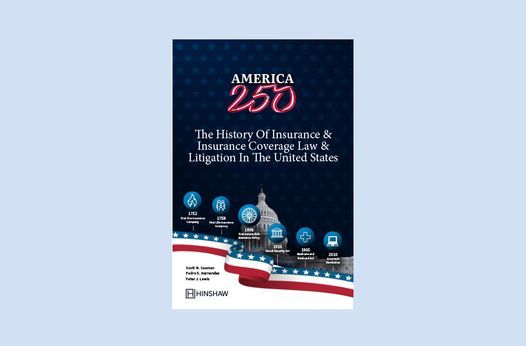
Hinshaw Releases America 250 Book Exploring Insurance's Role in Building the United States
In The News
Jun 12, 2026
Jennifer Driscoll Discusses Antitrust Case Against Shipping Container Manufacturers
Privacy, Cyber & AI Decoded Alert
Jun 12, 2026
Hot Topics in Data Privacy: Staying Cool and Compliant This Summer
Press Release
May 20, 2026 | Updated June 10, 2026
Hinshaw Releases America 250 Book Exploring Insurance's Role in Building the United States

Press Release
Jun 11, 2026
Nia Binns Honored With 2026 Rising Star Award by the Black Women Lawyers’ Association

Press Release
Jun 11, 2026

Insights for Employers Alert
Jun 9, 2026
A Win for Employers: Federal District Court Finds $100,000 H-1B Visa Petition Fee is Unlawful

Press Release
Jun 9, 2026
Calvin Edwards Honored With 2026 Rising Star Award by the Black Men Lawyers’ Association
Webinar
Jun 9, 2026
John DeLascio Speaks on How Social Inflation is Reshaping Insurance Risk
Consumer Crossroads: Where Financial Services and Litigation Intersect
Jun 8, 2026
Court Distinguishes Between Clickwrap and Browsewrap Arbitration Agreements

Webinar
Jun 8, 2026
Aimee Delaney and Jason Oliveri Speak on Workplace Generative AI Usage

Insights for Insurers Alert
Jun 8, 2026
New York’s Sweeping Motor Vehicle Tort Law Reforms: More Than Meets the Eye

