
Federal Circuit Upholds Advance Conflict Waiver in Joint Defense Agreement
Lawyers for the Profession® Alert
Lawyers for the Profession® Alert | 2 min read
Nov 10, 2011
In re Shared Memory Graphics LLC, ___ F.3d ___, 2011 WL 4390020 (Fed. Cir. 2011)
Brief Summary
The U.S. Court of Appeals for the Federal Circuit upheld an advance conflicts of interest waiver contained in a joint defense agreement where the lawyer who had participated in the joint defense as in-house counsel moved to a law firm that then sued one of the other parties to the joint defense agreement.
Complete Summary
The lawyer worked for a chip maker at a time when the latter had a joint defense agreement with a video game company. The agreement indicated that counsel for either party had no duties to the other party beyond those specified in the agreement, and that nothing in the agreement could be used as the basis to seek to disqualify the respective counsel in future litigation. As part of that litigation, the attorney helped assess a patent infringement claim. He then left the chip maker to join a law firm. The law firm brought a separate (albeit similar) lawsuit against the video game company.
The video game company moved to disqualify the firm, arguing that the lawyer had received confidential information about the company during his tenure at the chip maker. The U.S. District Court for the Northern District of California granted the motion, holding that the joint defense agreement only served as a conflict waiver to conflicts between the parties to that agreement (i.e., the chip maker and the video game company). The law firm sought a writ of mandamus in the Federal Circuit.
The Federal Circuit vacated the disqualification order, holding that the joint defense agreement served as a waiver of future conflicts of interest. The court focused on the fact that the agreement waived conflicts in “any future litigation,” and noted that such advance waiver agreements are generally allowed where, as here, there is no attorney-client relationship. The Federal Circuit further indicated that the district court’s interpretation produced an illogical result. Namely, if the agreement only applied to current counsel of the chip maker and video game company, then lawyers who left those companies would not be bound by the duty of confidentiality created by the agreement.
A dissenting judge argued that the district court had not abused its discretion because, inter alia, the lawyer arguably had obtained the video game company’s confidential information, and the firm had not taken steps to screen the attorney.
Significance of Opinion
This opinion demonstrates a less strict application of the conflict of interest rule(s) where an attorney’s prior relationship with the party seeking disqualification arose out of a joint defense agreement rather than an attorney-client relationship.
For more information, please contact your regular Hinshaw attorney.
This alert has been prepared by Hinshaw & Culbertson LLP to provide information on recent legal developments of interest to our readers. It is not intended to provide legal advice for a specific situation or to create an attorney-client relationship.
Related Capabilities
Featured Insights

In The News
Jun 12, 2026
Jennifer Driscoll Discusses Antitrust Case Against Shipping Container Manufacturers

Privacy, Cyber & AI Decoded Alert
Jun 12, 2026
Hot Topics in Data Privacy: Staying Cool and Compliant This Summer
Press Release
May 20, 2026 | Updated June 10, 2026
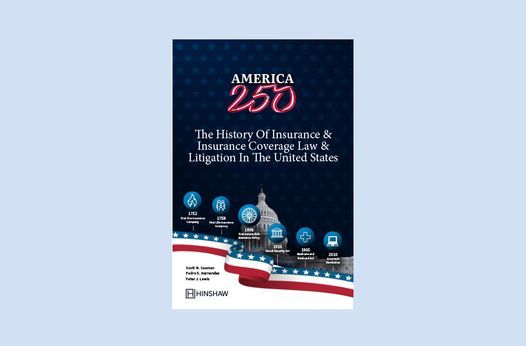
Hinshaw Releases America 250 Book Exploring Insurance's Role in Building the United States
In The News
Jun 12, 2026
Jennifer Driscoll Discusses Antitrust Case Against Shipping Container Manufacturers
Privacy, Cyber & AI Decoded Alert
Jun 12, 2026
Hot Topics in Data Privacy: Staying Cool and Compliant This Summer
Press Release
May 20, 2026 | Updated June 10, 2026
Hinshaw Releases America 250 Book Exploring Insurance's Role in Building the United States

Press Release
Jun 11, 2026
Nia Binns Honored With 2026 Rising Star Award by the Black Women Lawyers’ Association

Press Release
Jun 11, 2026

Insights for Employers Alert
Jun 9, 2026
A Win for Employers: Federal District Court Finds $100,000 H-1B Visa Petition Fee is Unlawful

Press Release
Jun 9, 2026
Calvin Edwards Honored With 2026 Rising Star Award by the Black Men Lawyers’ Association

Webinar
Jun 9, 2026
John DeLascio Speaks on How Social Inflation is Reshaping Insurance Risk
Consumer Crossroads: Where Financial Services and Litigation Intersect
Jun 8, 2026
Court Distinguishes Between Clickwrap and Browsewrap Arbitration Agreements

Webinar
Jun 8, 2026
Aimee Delaney and Jason Oliveri Speak on Workplace Generative AI Usage

Insights for Insurers Alert
Jun 8, 2026
New York’s Sweeping Motor Vehicle Tort Law Reforms: More Than Meets the Eye

