
ABA Issues Guidance on Ethical Issues Related to Lawyer Websites
Lawyers for the Profession® Alert
Lawyers for the Profession® Alert | 3 min read
Oct 19, 2010
ABA Standing Committee on Ethics and Professional Responsibility, Formal Op. 10-457 (August 2010)
Brief Summary
In an opinion acknowledging the pervasiveness and usefulness of lawyer websites, the ABA addressed some of the ethical risks inherent in such sites. Namely, information on lawyer websites should be kept current in order to avoid misleading website visitors. To the extent that information about clients is published online, lawyers must seek clients’ informed consent. And lawyers should be aware that inviting the submission of visitor information might lead to a prospective client relationship.
Complete Summary
The ABA Standing Committee on Ethics and Professional Responsibility addressed the ethical obligations that lawyers should consider in relation to the content and features of their websites. In doing so, the Committee referred to a number of individual states’ ethics opinions.
The Committee first noted that website content should be updated on a regular basis in order to avoid violating the prohibitions against false, fraudulent or misleading information contained in Model Rules 7.1, 8.4(c) and 4.1(a). For example, firms should remove lawyers’ biographical information within a reasonable time after they leave the firm.
Those rules also apply to general descriptions of the law. In order to avoid misleading readers, the Committee noted that any such information should be kept current. Moreover, such information should be accompanied by the author’s contact information, the dates on which substantive information was last reviewed, and a statement that the information is general in nature and does not constitute legal advice.
Drawing the line between legal information and legal advice, the Committee noted, requires examining context in addition to content. For example, if legal information is conveyed to a group, it is likely not legal advice; but if the legal information is conveyed in relation to a non-hypothetical set of facts, it may be considered legal advice.
Websites may also raise confidentiality issues. Lawyers may list current and former clients, and describe client matters, the Committee noted. But this information is protected by Rules 1.6 and 1.9, and requires informed consent from the client before being published.
Further, website visitor inquiries may raise issues under Rule 1.18, which protects the confidentiality of prospective client communications. In order to become a prospective client, an individual must “discuss” the possibility of forming a client-lawyer relationship with the attorney. The Committee noted that the discussion requirement is met if a website invites the submission of information related to the possibility of forming a client-lawyer relationship and an individual responds to that invitation. The Committee advised that, in order to avoid conveying a willingness to engage in such discussions, lawyer websites should include appropriate warnings.
On a more general level, the Committee noted that warnings or cautionary statements can be used to avoid a misunderstanding by a website visitor that “(1) a client-lawyer relationship has been created, (2) the visitor’s information will be kept confidential, (3) legal advice has been given, or (4) the lawyer will be prevented from representing an adverse party.”
Finally, the Committee noted that this opinion does not pertain to government lawyers or nonprofit law advocacy firms or groups.
Significance of Opinion
This opinion demonstrates that websites are commonly used and can be an effective means of communicating with the public. There are, however, numerous risks that must be kept in mind and monitored, such as the importance of keeping website content up to date, as well as obtaining a client’s informed consent where appropriate and utilizing appropriate warnings and disclaimers.
This alert has been prepared by Hinshaw & Culbertson LLP to provide information on recent legal developments of interest to our readers. It is not intended to provide legal advice for a specific situation or to create an attorney-client relationship.
Related Capabilities
Featured Insights
Press Release
May 20, 2026 | Updated June 10, 2026
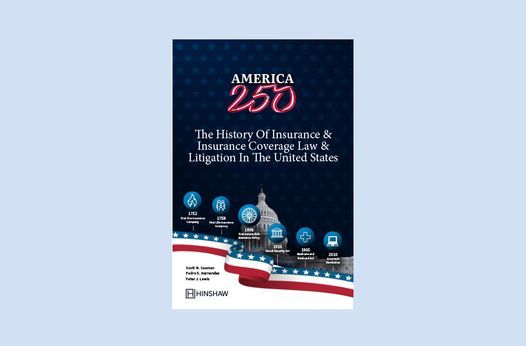
Hinshaw Releases America 250 Book Exploring Insurance's Role in Building the United States

Press Release
Jun 11, 2026

Press Release
May 20, 2026 | Updated June 10, 2026
Hinshaw Releases America 250 Book Exploring Insurance's Role in Building the United States
Press Release
Jun 11, 2026

Insights for Employers Alert
Jun 9, 2026
A Win for Employers: Federal District Court Finds $100,000 H-1B Visa Petition Fee is Unlawful
Press Release
Jun 9, 2026
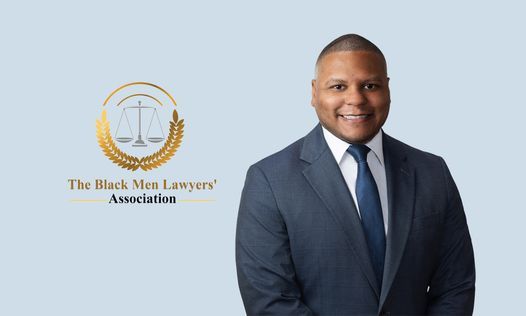
Calvin Edwards Honored With 2026 Rising Star Award by the Black Men Lawyers’ Association
Webinar
Jun 9, 2026
John DeLascio Speaks on How Social Inflation is Reshaping Insurance Risk
Consumer Crossroads: Where Financial Services and Litigation Intersect
Jun 8, 2026
Court Distinguishes Between Clickwrap and Browsewrap Arbitration Agreements

Webinar
Jun 8, 2026
Aimee Delaney and Jason Oliveri Speak on Workplace Generative AI Usage

Insights for Insurers Alert
Jun 8, 2026
New York’s Sweeping Motor Vehicle Tort Law Reforms: More Than Meets the Eye

Privacy, Cyber & AI Decoded Alert
Jun 5, 2026
AI Governance Expectations on the Rise for Insurers Amid New Regulatory Activity

Press Release
Jun 4, 2026
Hinshaw Recognized Nationally in 2026 Chambers USA Directory

