
Utah's District Court Dismisses Malpractice Action Against Florida Firm Based on Lack of Jurisdiction
Lawyers for the Profession® Alert | 2 min read
Apr 22, 2020
R.M. v. Dennis, Jackson, Martin & Fontela, P.A., 2020 U.S. Dist. LEXIS 68115
Brief Summary
Utah's federal district court granted a motion to dismiss filed by a Florida-based law firm and its associate (collectively "defendants") based on lack of subject matter jurisdiction, finding that no general or specific jurisdiction existed. The court concluded that the firm did not have sufficient minimum contacts to establish personal jurisdiction. Additionally, the court held that a reverse agency theory to establish jurisdiction did not apply and would be unconstitutional.
Complete Summary
Defendants were retained by an insurer to defend a Utah corporation, R-L Sales, LLC, in a personal injury lawsuit filed in Florida. All litigation activity related to the personal injury case occurred in Florida, except for one deposition that defendants took in Utah. Nearly two years after the filing of the underlying action, and after an adverse verdict of $2 million was rendered in it, this suit was filed against defendants alleging professional negligence and breach of fiduciary duty. Defendants filed a motion to dismiss for lack of personal jurisdiction, which the court granted.
The court reviewed Utah's long-arm statute and constitutional due process requirements, including the extent of the contacts between defendants and the forum state (Utah). Minimum contact requirements can be met via general or specific jurisdiction. Under general jurisdiction, the contacts must render them essentially at home in the forum state. For specific jurisdiction, the defendant must have purposefully directed its activities toward the forum jurisdiction, and the action must be based on the activities that relate to the contacts with the forum. In addition, for specific jurisdiction, the forum state's jurisdiction cannot offend traditional notions of fair play and substantial justice.
Here, the events that gave rise to the representation—and the underlying case itself—took place in Florida, with the exception of one deposition. The other contacts with Utah were through emails and phone calls. The court held that general jurisdiction did not apply because defendants had no continuous or systematic contacts with Utah.
Additionally, because there were no purposeful efforts to solicit clients in Utah, the court held that there was no specific jurisdiction. Defendants only represented the Utah corporation in Florida because the insurer retained them to handle the case in Florida.
The court also rejected plaintiffs' reverse agency theory. Plaintiffs had argued that defendants were acting as agents of the insurer, which was subject to jurisdiction because of its contract with the Utah insured. In other words, plaintiffs argued that as agents of the insurer, defendants would be subject to the same jurisdiction as its principal. In disagreeing, the court noted that acceptance of such an argument would "drastically expand the parameters of personal jurisdiction" and "would violate the constitutional due process requirements."
Significance of Decision
Attorneys and law firms are often retained to represent parties in the home state of the lawyer or firm. Should a professional liability claim arise from such representation, and the attorney or firm is sued in a foreign jurisdiction, they should carefully consider if jurisdiction is proper there. Jurisdictional questions are, however, evaluated on a case-by-case basis and are contingent on the extent of the contacts with the forum jurisdiction.
Related People
Related Capabilities
Featured Insights

Press Release
Oct 8, 2026
Technology Service Corporation Closes on Acquisition by Blackstone-Backed Purchaser

Employment Law Observer
Oct 8, 2026
“We Didn’t Know” is No Longer an Employer Defense for Religious Accommodation Claims Under Title VII


Press Release
Oct 8, 2026
Technology Service Corporation Closes on Acquisition by Blackstone-Backed Purchaser
Employment Law Observer
Oct 8, 2026
“We Didn’t Know” is No Longer an Employer Defense for Religious Accommodation Claims Under Title VII
In The News
Oct 8, 2026
Lucy Wang Analyzes What Insurers Need to Know About Two New California Laws

Lawyers' Lawyer Newsletter
Oct 8, 2026
The Rise of Management Service Organizations: How Lawyers and Lawmakers are Responding
In The News
Oct 7, 2026
Scott Seaman Discusses Google’s Coverage Battle Over Social Media Addiction Claims

Consumer Crossroads: Where Financial Services and Litigation Intersect
Oct 6, 2026
Mixed Messages Ongoing as Courts Disagree Whether Texts Constitute “Calls” Under the TCPA
Press Release
Oct 5, 2026
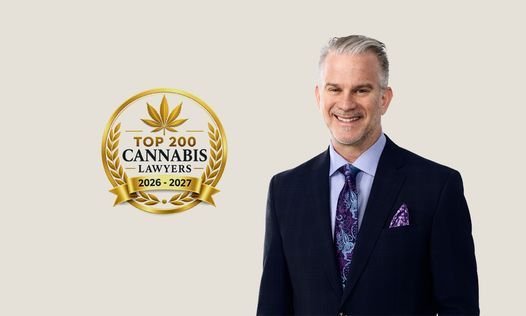
Mitchel Chargo Selected to the Seventh Edition of the Global Top 200 Cannabis Lawyers Directory

