
Future Conflict Requires Knowledge of Specific Adversity or Particular Clients Who May Be Involved
Lawyers for the Profession® Alert
Lawyers for the Profession® Alert | 2 min read
Dec 15, 2010
District of Columbia Legal Ethics Committee, Op. 356 (Nov. 2010)
Brief Summary
When an attorney suspects that adversity will develop during a matter, but cannot identify the specific nature of the adversity or the particular client(s) who will take an adverse position, no conflict of interest exists. And if a conflict subsequently arises between Clients A and B — the waiver of which would require the revelation of Client A’s confidences — the lawyer need not obtain client B’s informed consent to continue to represent Client A, so long as the conflict was not reasonably foreseeable.
Complete Summary
The Washington D.C. Bar Legal Ethics Committee addressed two issues arising out of the following factual scenario: Lawyer represents Client A in a proposed acquisition of Company X. Lawyer knows — based only on her industry experience — that one or more of her other clients also likely will attempt to either bid on Company X or oppose Client A’s acquisition on some basis, but she does not know which specific clients might do so. Client A asks lawyer to keep the acquisition confidential until it is formally announced. But before a formal announcement is made, Client B announces that it will attempt to acquire Company X, albeit with different counsel.
The Legal Ethics Committee first addressed whether the lawyer could represent Client A despite the likelihood of a future conflict developing. The Committee opined that no conflict would exist in this scenario because the attorney could not identify the specific nature of the conflict or the potentially affected clients. Regarding the applicable rule, RPC 1.7, the Committee noted that its text suggests that conflicts must be clear, specific and not based on mere speculation. The Committee focused on the requirements for obtaining client consent to a conflict, which would be impossible to fulfill absent specific knowledge of the affected clients and the nature of the conflict.
The Legal Ethics Committee then addressed whether the attorney would be required to withdraw from representing Client A once Client B announced its plans. Given that Client A requested that its proposed acquisition remain confidential, it would be impossible for the lawyer to obtain Client B’s informed consent to representation of Client A without revealing Client A’s confidential information. The Committee opined that, because the conflict created by Client B’s actions was not reasonably foreseeable under the terms of the applicable rule, no waiver was required from Client B, and the attorney could continue to represent Client A. Finally, the Committee noted that continued representation nonetheless would be barred if the conflict were likely to adversely affect the lawyer’s representation or judgement, under RPC 1.7(b)(2)-(4).
Significance of Opinion
This opinion is helpful for attorneys who work in highly specialized areas, or in industries with small client pools where it may be easy to forecast a conflict of some sort, but difficult to predict the precise nature of the adversity or the particular other clients who may be or become involved. The Committee also elaborates on the general understanding that withdrawal may not be necessary when a conflict is “thrust-upon” a lawyer, even absent a waiver.
This alert has been prepared by Hinshaw & Culbertson LLP to provide information on recent legal developments of interest to our readers. It is not intended to provide legal advice for a specific situation or to create an attorney-client relationship.
Related Capabilities
Featured Insights

Insights for Employers Alert
Jun 9, 2026
A Win for Employers: Federal District Court Finds $100,000 H-1B Visa Petition Fee is Unlawful
Press Release
Jun 9, 2026
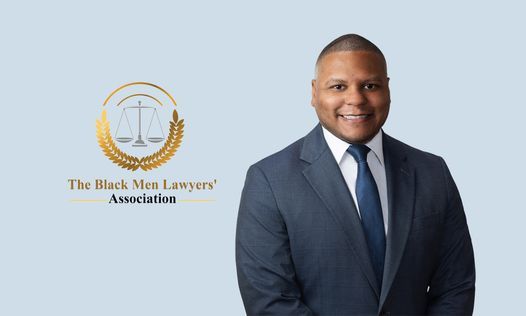
Calvin Edwards Honored With 2026 Rising Star Award by the Black Men Lawyers’ Association

Webinar
Jun 9, 2026
John DeLascio Speaks on How Social Inflation is Reshaping Insurance Risk


Insights for Employers Alert
Jun 9, 2026
A Win for Employers: Federal District Court Finds $100,000 H-1B Visa Petition Fee is Unlawful
Press Release
Jun 9, 2026
Calvin Edwards Honored With 2026 Rising Star Award by the Black Men Lawyers’ Association
Webinar
Jun 9, 2026
John DeLascio Speaks on How Social Inflation is Reshaping Insurance Risk

Consumer Crossroads: Where Financial Services and Litigation Intersect
Jun 8, 2026
Court Distinguishes Between Clickwrap and Browsewrap Arbitration Agreements

Webinar
Jun 8, 2026
Aimee Delaney and Jason Oliveri Speak on Workplace Generative AI Usage

Insights for Insurers Alert
Jun 8, 2026
New York’s Sweeping Motor Vehicle Tort Law Reforms: More Than Meets the Eye

Privacy, Cyber & AI Decoded Alert
Jun 5, 2026
AI Governance Expectations on the Rise for Insurers Amid New Regulatory Activity

Press Release
Jun 4, 2026
Hinshaw Recognized Nationally in 2026 Chambers USA Directory
Press Release
Jun 3, 2026
In The News
Jun 3, 2026
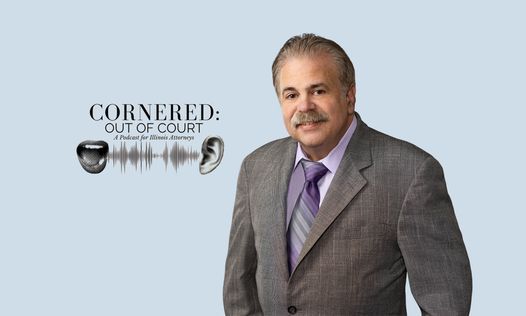
Scott Seaman Discusses Wrongful-Death and Survival Actions Handbook on IICLE Podcast

