
FSA Lenders Not Subject to State UPL Laws
Lawyers for the Profession® Alert
Lawyers for the Profession® Alert | 2 min read
Jan 26, 2010
Casey v. Federal Deposit Insurance Corp., 583 F.3d 586 (8th Cir. 2009)
Brief Summary
A group of homeowners sued their mortgage lenders, contending that fees charged for preparing loan-related documents violated Missouri’s statutory prohibition on the unauthorized practice of law. The Eighth Circuit held that a federal regulation, which governed federal savings association lenders, preempted Missouri’s state unauthorized practice of law statute.
Complete Summary
Seven homeowners brought claims against their federal savings association (FSA) mortgage lenders for unauthorized practice of law (UPL). A Missouri state court granted the lenders’ motion to dismiss, holding the Missouri UPL law preempted by a federal regulation. While the homeowners’ appeal was pending, the FDIC was appointed receiver of one of the lenders. The FDIC exercised its power to unilaterally remove the case to federal court based on “arising under” jurisdiction. The District Court, Eastern District of Missouri, adopted the state court preemption holding and transferred the case to the Eighth Circuit.
The Eighth Circuit affirmed. The court rejected the homeowners’ argument that abstention was appropriate under Burford v. Sun Oil Co., 319 U.S. 315 (1943) in order to avoid impairing the state’s ability to regulate the legal profession. Federal courts may abstain under Burford when resolution of a case seeking injunctive relief turns on a complex state regulatory scheme that serves important state interests. The Eighth Circuit noted that this case sought monetary relief and held that UPL in Missouri was not the subject of a complex regulatory scheme.
Regarding the preemption issue, the court held that Missouri’s UPL law fell within the preemptive scope of 12 C.F.R. § 560.2, which was issued by the Office of Thrift Supervision (OTS). The court began by noting that § 560.2 expressly states OTS’s intent to occupy the field of FSA lending regulation. In addition, subsection (b) preempts, inter alia, “state laws purporting to impose requirements regarding . . . (5) [l]oan-related fees . . . .” Accordingly, because Missouri’s UPL law as applied would require FSA lenders to be licensed in the practice of law in order to charge fees for preparing loan-related documents, the court concluded that Missouri’s UPL law was preempted by federal law.
Significance of Opinion
This opinion allows FSA lenders, who are not lawyers, to charge borrowers for the preparation of loan-related legal documents despite a state’s UPL laws that would prohibit the practice. Although courts may be reluctant to give federal financial regulators authority to regulate the practice of law in the states, as demonstrated by the federal district court’s recent decision prohibiting the FTC extending the scope of the Fair and Accurate Credit Transactions Act, American Bar Association v. Federal Trade Commission, 2009 WL 4289505 (D.D.C. 2009) (clear instances of express federal field preemption will be respected if the exercise of federal authority is constitutional).
In addition, although the court holds that Missouri’s generally applicable statutory UPL law is not part of a complex state regulatory scheme for purposes of Burford abstention, the court leaves open the question whether state rules of professional conduct—which in Missouri and many other states include a separate UPL rule applicable to lawyers—would constitute a complex state regulatory scheme as to which federal court abstention may be appropriate.
This alert has been prepared by Hinshaw & Culbertson LLP to provide information on recent legal developments of interest to our readers. It is not intended to provide legal advice for a specific situation or to create an attorney-client relationship.
Related Capabilities
Featured Insights

Insights for Employers Alert
Jun 9, 2026
A Win for Employers: Federal District Court Finds $100,000 H-1B Visa Petition Fee is Unlawful
Press Release
Jun 9, 2026
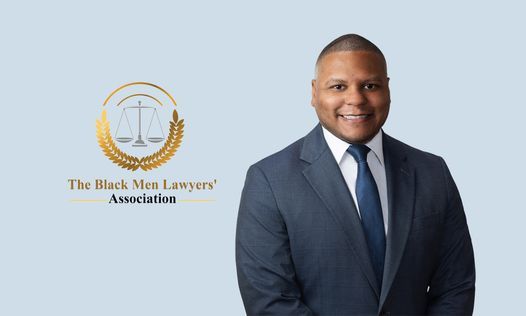
Calvin Edwards Honored With 2026 Rising Star Award by the Black Men Lawyers’ Association

Webinar
Jun 9, 2026
John DeLascio Speaks on How Social Inflation is Reshaping Insurance Risk

Insights for Employers Alert
Jun 9, 2026
A Win for Employers: Federal District Court Finds $100,000 H-1B Visa Petition Fee is Unlawful
Press Release
Jun 9, 2026
Calvin Edwards Honored With 2026 Rising Star Award by the Black Men Lawyers’ Association
Webinar
Jun 9, 2026
John DeLascio Speaks on How Social Inflation is Reshaping Insurance Risk
Consumer Crossroads: Where Financial Services and Litigation Intersect
Jun 8, 2026
Court Distinguishes Between Clickwrap and Browsewrap Arbitration Agreements

Webinar
Jun 8, 2026
Aimee Delaney and Jason Oliveri Speak on Workplace Generative AI Usage

Insights for Insurers Alert
Jun 8, 2026
New York’s Sweeping Motor Vehicle Tort Law Reforms: More Than Meets the Eye

Privacy, Cyber & AI Decoded Alert
Jun 5, 2026
AI Governance Expectations on the Rise for Insurers Amid New Regulatory Activity

Press Release
Jun 4, 2026
Hinshaw Recognized Nationally in 2026 Chambers USA Directory
Press Release
Jun 3, 2026
In The News
Jun 3, 2026
Scott Seaman Discusses Wrongful-Death and Survival Actions Handbook on IICLE Podcast

