
Ethical Rule Does Not Alter Unconscionability Analysis As to Fee Arrangement
Lawyers for the Profession® Alert
Lawyers for the Profession® Alert | 2 min read
Sep 21, 2010
Cotchett, Pitre & McCarthy v. Universal Paragon Corporation, 2010 WL 3398828, 10 Cal. Daily Op. Serv. 11 (Cal. App. 1 Dist. 2010)
Brief Summary
The California Court of Appeal, First District, held that a contingent fee agreement based on the value of the client’s pre-settlement damages assessment, rather than the actual value of settlement, was not unconscionable. And despite the existence of an ethical rule pertaining to unconscionability, the court held that the common law unconscionability test applied.
Complete Summary
A law firm and its corporate client entered into a fee agreement whereby the firm would receive reduced hourly rates as well as a 16 percent contingent fee. Because the parties knew that resolution of the underlying matter could involve the conveyance of real property in addition to, or in lieu of damages, they agreed to apply the 16 percent to the greater of the fair market value of the property or the client’s most recent damages assessment made for settlement purposes. During litigation the client estimated damages to be between $50 and $80 million. Shortly thereafter, the matter settled and the client received the property (fair market value: $18.75 million) along with $6 million in damages. The firm and the client disagreed on how to calculate the contingent fee and entered arbitration.
The arbitrator decided that the firm was entitled to 16 percent of the client’s most recent damages assessment. The arbitrator based her calculation on the lower end of the most recent assessment (i.e., $50 million), and, per the parties’ agreement, reduced the contingent fee by half of the amount already billed under the hourly fee agreement as well as litigation costs. The firm petitioned the superior court to affirm the award, which it did. The client appealed, arguing that the agreement was unconscionable and that it created a conflict of interest.
The Court of Appeal held that, given the parties’ equal bargaining power and sophistication, there was no procedural unconscionability, and that in comparison to the result obtained for the client, the fee was not substantively unconscionable. The court further held that California Rule of Professional Conduct (RPC) 4-200(A), which prohibits unconscionable fee agreements, does not supersede the common law test of unconscionability. The court noted that although RPC 4-200(A) sets out a number of factors to be considered in determining unconscionability, those factors can be grouped into either the procedural or substantive categories. The court held that both categories must be present for a finding of unconscionability. The court based this holding on the fact that the State Bar, upon adopting RPC 4-200(A), noted that this rule reflects existing California Supreme Court decisions.
Finally, the court held that basing the contingent fee on a damages assessment rather than the actual recovery did not create a conflict of interest. On this point, the court noted that all fee agreements involve a potential conflict, and that the arbitrator found that the firm’s representation was not influenced by the structure of the fee agreement.
Significance of Opinion
Although attorney-client dealings, in contrast to dealings between non-attorney parties, are generally subject to an additional layer of ethical standards, the court in this opinion concludes that the common law unconscionability standard is unaltered in the attorney-client fee agreement context.
This alert has been prepared by Hinshaw & Culbertson LLP to provide information on recent legal developments of interest to our readers. It is not intended to provide legal advice for a specific situation or to create an attorney-client relationship.
Related Capabilities
Featured Insights


Insights for Employers Alert
Jun 9, 2026
A Win for Employers: Federal District Court Finds $100,000 H-1B Visa Petition Fee is Unlawful
Press Release
Jun 9, 2026
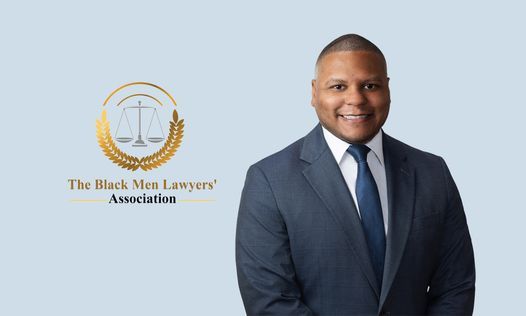
Calvin Edwards Honored With 2026 Rising Star Award by the Black Men Lawyers’ Association

Insights for Employers Alert
Jun 9, 2026
A Win for Employers: Federal District Court Finds $100,000 H-1B Visa Petition Fee is Unlawful
Press Release
Jun 9, 2026
Calvin Edwards Honored With 2026 Rising Star Award by the Black Men Lawyers’ Association
Webinar
Jun 9, 2026
John DeLascio Speaks on How Social Inflation is Reshaping Insurance Risk
Consumer Crossroads: Where Financial Services and Litigation Intersect
Jun 8, 2026
Court Distinguishes Between Clickwrap and Browsewrap Arbitration Agreements

Webinar
Jun 8, 2026
Aimee Delaney and Jason Oliveri Speak on Workplace Generative AI Usage

Insights for Insurers Alert
Jun 8, 2026
New York’s Sweeping Motor Vehicle Tort Law Reforms: More Than Meets the Eye

Privacy, Cyber & AI Decoded Alert
Jun 5, 2026
AI Governance Expectations on the Rise for Insurers Amid New Regulatory Activity
Press Release
Jun 4, 2026
Hinshaw Recognized Nationally in 2026 Chambers USA Directory
Press Release
Jun 3, 2026

