
Colorado Bar Differentiates Online Directories From Lawyer Referral Services
Lawyers for the Profession® Alert
Lawyers for the Profession® Alert | 2 min read
Jan 6, 2011
Ethics Committee of the Colorado Bar Association, Formal Ethics Op. 122 (May 17, 2008, amended Oct. 16, 2010)
Brief Summary
In an opinion regarding online advertising, the Colorado Bar Association’s Ethics Committee differentiated between permissible lawyer directories and impermissible for-profit lawyer referral services. Among other factors, the committee focused on whether such services recommend attorneys based on subjective factors, charge fees based on the number of client leads, or omit advertising disclaimers, all three of which features are associated with impermissible services.
Complete Summary
The ethics committee amended Ethics Opinion 122, which helps distinguish between permissible online lawyer directories and impermissible referral services. Although Colorado RPC 7.2 allows online directories, it simultaneously prohibits attorneys from giving “anything of value to a person for recommending the lawyer’s services.” To help distinguish between the two, the committee discussed two hypothetical online programs and offered criteria for evaluating internet marketing programs.
The committee opined that attorneys could ethically pay to be listed in a directory which grouped lawyers, was searchable based on practice area and geographical area, and allowed lawyers to pay for a more prominent listing. Participation in such a service would be permissible, the committee noted, so long as the directory contained a disclaimer prominently explaining that it was an advertisement and that it was not recommending a specific lawyer to a client. In reaching this conclusion, the committee highlighted the fact that advertising charges paid by the lawyers would be fixed rather than tied to a number of “leads” generated.
By contrast, the committee opined that, generally, attorneys could not ethically participate in a for-profit referral service that purported to pair clients with a “specifically qualified” lawyer and required attorneys to pay for each contact generated.
Finally, the committee offered guidance for determining whether participation in a program that falls between these two extremes will be permissible. Essentially, permissible programs must have five characteristics: (1) the process by which lawyer and client are matched must be nonsubjective (e.g., performed by a software program); (2) the program must take steps to ensure that clients know that attorneys have paid to be listed, and that the program makes no assertion about lawyer quality; (3) the program’s fee must be reasonable; (4) the program must not restrict the number of attorneys allowed to participate in a given geographic or practice area; and (5) every initial communication from lawyer to client must comply with Colorado RPC 7.3(d) (direct contact with prospective clients).
Significance of Opinion
This opinion is a straightforward attempt to sort through some of the issues attendant upon evaluating the ethical propriety of online services that link prospective clients to lawyers who may be hired to represent them. But it is important to note that other jurisdictions still vary widely in terms of which online services and components are deemed ethical (and this opinion does a good job of cataloguing some of those for reference).
This alert has been prepared by Hinshaw & Culbertson LLP to provide information on recent legal developments of interest to our readers. It is not intended to provide legal advice for a specific situation or to create an attorney-client relationship.
Related Capabilities
Featured Insights


Insights for Employers Alert
Jun 9, 2026
A Win for Employers: Federal District Court Finds $100,000 H-1B Visa Petition Fee is Unlawful
Press Release
Jun 9, 2026
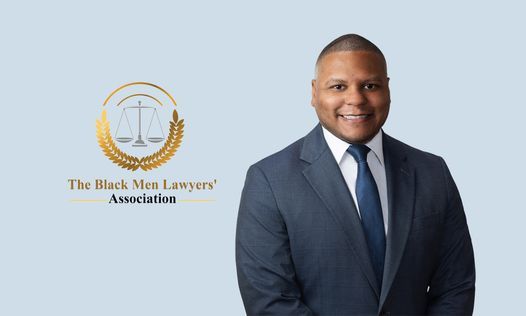
Calvin Edwards Honored With 2026 Rising Star Award by the Black Men Lawyers’ Association


Insights for Employers Alert
Jun 9, 2026
A Win for Employers: Federal District Court Finds $100,000 H-1B Visa Petition Fee is Unlawful
Press Release
Jun 9, 2026
Calvin Edwards Honored With 2026 Rising Star Award by the Black Men Lawyers’ Association

Webinar
Jun 9, 2026
John DeLascio Speaks on How Social Inflation is Reshaping Insurance Risk
Consumer Crossroads: Where Financial Services and Litigation Intersect
Jun 8, 2026
Court Distinguishes Between Clickwrap and Browsewrap Arbitration Agreements

Webinar
Jun 8, 2026
Aimee Delaney and Jason Oliveri Speak on Workplace Generative AI Usage

Insights for Insurers Alert
Jun 8, 2026
New York’s Sweeping Motor Vehicle Tort Law Reforms: More Than Meets the Eye

Privacy, Cyber & AI Decoded Alert
Jun 5, 2026
AI Governance Expectations on the Rise for Insurers Amid New Regulatory Activity

Press Release
Jun 4, 2026
Hinshaw Recognized Nationally in 2026 Chambers USA Directory
Press Release
Jun 3, 2026

