
ABA Provides Guidance for Warning Clients About the Risks of Electronic Attorney-Client Communications
Lawyers for the Profession® Alert
Lawyers for the Profession® Alert | 3 min read
Sep 14, 2011
American Bar Association Formal Opinion 11-459: Duty to Protect the Confidentiality of E-mail Communications with One’s Client (Aug. 4, 2011)
Brief Summary
The American Bar Association (ABA) issued a formal opinion that provides guidance as to a lawyer’s obligation to warn clients about the risks inherent in using e-mail, text messaging and other forms of electronic attorney-client communications, particularly with computers or electronic devices that may be provided by an employer.
Complete Summary
The ABA Standing Committee on Ethics and Professional Responsibility issued Formal Opinion 11-459, addressing a lawyer’s ethical duties pertaining to maintaining the confidentiality of electronic attorney-client communications under the ABA’s Model Rules of Professional Conduct. The formal opinion concludes that the duties to provide competent representation (ABA Model Rule 1.1) and to protect information related to the representation (ABA Model Rule 1.6(a)) oblige the lawyer to warn the client at the earliest reasonable opportunity about the risks of third-party access to electronic attorney-client communications.
Formal Opinion 11-459 posits a hypothetical involving an employee who may use a workplace device (employer-provided computer, smartphone, tablet etc.) for electronic communications with the employee’s lawyer (e-mail, text messaging etc.). Under these circumstances, the attorney has a duty to advise the client at the earliest opportunity about the risks of employer or other third-party access to those communications, including the risks of review and potential admissibility of the communication in an evidentiary proceeding. The opinion suggests preventive measures including limiting communications to personal e-mail accounts not accessible to the employer on the workplace computer or other device. The opinion further recognizes that the same underlying considerations regarding advice to the client and preventive measures would apply to clients outside the employment context.
Formal Opinion 11-459 counsels the attorney to assume that the employer has a policy permitting access unless the lawyer has reason to believe otherwise. The opinion recognizes that the substantive law regarding employer and third-party access is evolving and varies among the jurisdictions and thus does not purport to provide guidance with respect to the circumstances under which these communications may or may not be protected by the attorney-client privilege or other substantive law.
Significance of Opinion
Formal Opinion 11-459 is part of a growing series of ABA formal opinions that confront issues related to protection of client information in the electronic age. These include Formal Opinion 99-413 (1999) (protecting confidentiality of unencrypted e-mail); Formal Opinion 08-451 (2008) (outsourcing support services); and most recently Formal Opinion 11-460 (2011) (lawyer’s duty when receiving third party’s attorney-client communications). In each instance, the general duty of competent representation under ABA Model Rule 1.1 and the duty to protect client information under Model Rule 1.6(a) provide an evolving standard against which to judge the lawyer’s conduct, especially as both technology and the substantive law of privilege and privacy continue to develop. Although not mentioned specifically in this formal opinion, attorneys also should be alert to the potential for statutory public records requests in the context of government generally and public employment specifically, which may raise additional legal issues with respect to public access to an individual’s attorney-client communications.
For further information on ABA Formal Opinion 11-460, please see the September 7, 2011, issue of the Lawyers for the Profession Alert.
For more information, please contact your regular Hinshaw attorney.
This alert has been prepared by Hinshaw & Culbertson LLP to provide information on recent legal developments of interest to our readers. It is not intended to provide legal advice for a specific situation or to create an attorney-client relationship.
Related Capabilities
Featured Insights

Insights for Employers Alert
Jun 9, 2026
A Win for Employers: Federal District Court Finds $100,000 H-1B Visa Petition Fee is Unlawful
Press Release
Jun 9, 2026
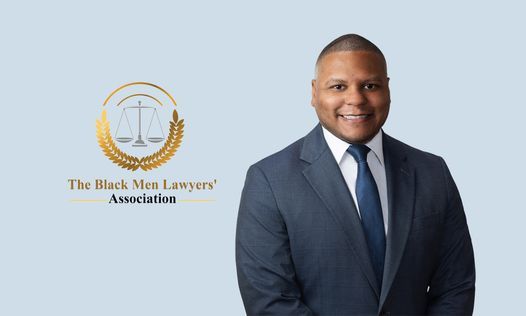
Calvin Edwards Honored With 2026 Rising Star Award by the Black Men Lawyers’ Association
Webinar
Jun 9, 2026
John DeLascio Speaks on How Social Inflation is Reshaping Insurance Risk

Insights for Employers Alert
Jun 9, 2026
A Win for Employers: Federal District Court Finds $100,000 H-1B Visa Petition Fee is Unlawful
Press Release
Jun 9, 2026
Calvin Edwards Honored With 2026 Rising Star Award by the Black Men Lawyers’ Association
Webinar
Jun 9, 2026
John DeLascio Speaks on How Social Inflation is Reshaping Insurance Risk
Consumer Crossroads: Where Financial Services and Litigation Intersect
Jun 8, 2026
Court Distinguishes Between Clickwrap and Browsewrap Arbitration Agreements

Webinar
Jun 8, 2026
Aimee Delaney and Jason Oliveri Speak on Workplace Generative AI Usage

Insights for Insurers Alert
Jun 8, 2026
New York’s Sweeping Motor Vehicle Tort Law Reforms: More Than Meets the Eye

Privacy, Cyber & AI Decoded Alert
Jun 5, 2026
AI Governance Expectations on the Rise for Insurers Amid New Regulatory Activity

Press Release
Jun 4, 2026
Hinshaw Recognized Nationally in 2026 Chambers USA Directory
Press Release
Jun 3, 2026
In The News
Jun 3, 2026
Scott Seaman Discusses Wrongful-Death and Survival Actions Handbook on IICLE Podcast

