
Ninth Circuit Reverses Sanctions for Failure to Consider Willfulness, Fault or Bad Faith
Lawyers for the Profession® Alert
Lawyers for the Profession® Alert | 2 min read
Apr 11, 2012
Brief Summary
The U.S. Court of Appeals for the Ninth Circuit held that the imposition of terminating sanctions under Fed. R. Civ. P. 37(c)(1) requires the court to consider willfulness, fault or bad faith, as well as the availability of lesser sanctions.
Complete Summary
This matter involved a dispute between insured and insurer over the extent to which the insured’s loss was covered. The insured brought, inter alia, a bad faith tort claim against the insurer based on the insurer’s denial of coverage. The insured also sought recovery of its attorney’s fees reasonably incurred to compel payment of the policy benefits. In California such fees are known as Brandt fees.
In its pretrial memorandum, the insured indicated that it would support its Brandt fees claim with certain invoices. Over the following months, the insurer sought such invoices to no avail. For not producing the invoices, the U.S. District Court for the Southern District of California ultimately sanctioned the insured under Fed. R. Civ. P. 37(c)(1) by excluding the insured’s Brandt fees evidence. Rule 37(c)(1) forbids use of information at trial which was not properly disclosed under Fed. R. Civ. P. 26(a), but it also provides for alternative or additional types of sanctions. In this case, the lack of evidence resulting from the sanction led the district court to grant the insurer’s motion for judgment as a matter of law.
The Ninth Circuit reversed and remanded, holding that the district court had not made adequate findings to support its sanction. The Ninth Circuit held that the evidence preclusion sanction was particularly harsh because it fully undermined the insured’s Brandt fee claim as well as the insured’s request for punitive damages. In the court’s words, the sanction amounted to dismissal of a claim (i.e., a terminating sanction).
The Ninth Circuit held that a sanction that amounts to dismissal requires consideration of willfulness, fault or bad faith, as well as the availability of lesser sanctions. Because the district court failed to undertake such considerations, the Ninth Circuit reversed and remanded.
Significance of Opinion
This opinion provides that imposition of a terminating sanction, or a sanction amounting to such, under Fed. R. Civ. P. 37(c)(1) requires consideration of willfulness, fault or bad faith, as well as the availability of lesser sanctions. The Ninth Circuit previously has made clear that such considerations must accompany terminating sanctions under other sanctions rules. This opinion, for the first time, expressly and directly recognizes the applicability of such considerations under Rule 37(c)(1).
This alert has been prepared by Hinshaw & Culbertson LLP to provide information on recent legal developments of interest to our readers. It is not intended to provide legal advice for a specific situation or to create an attorney-client relationship.
Related Capabilities
Featured Insights

Insights for Employers Alert
Jun 9, 2026
A Win for Employers: Federal District Court Finds $100,000 H-1B Visa Petition Fee is Unlawful
Press Release
Jun 9, 2026
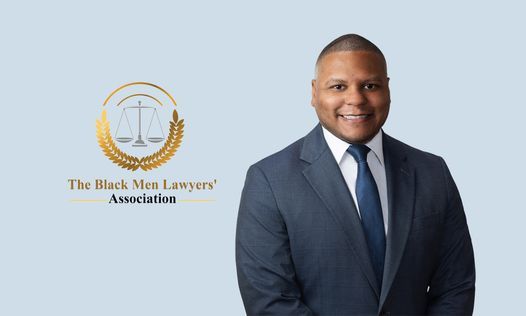
Calvin Edwards Honored With 2026 Rising Star Award by the Black Men Lawyers’ Association

Webinar
Jun 9, 2026
John DeLascio Speaks on How Social Inflation is Reshaping Insurance Risk

Insights for Employers Alert
Jun 9, 2026
A Win for Employers: Federal District Court Finds $100,000 H-1B Visa Petition Fee is Unlawful
Press Release
Jun 9, 2026
Calvin Edwards Honored With 2026 Rising Star Award by the Black Men Lawyers’ Association
Webinar
Jun 9, 2026
John DeLascio Speaks on How Social Inflation is Reshaping Insurance Risk
Consumer Crossroads: Where Financial Services and Litigation Intersect
Jun 8, 2026
Court Distinguishes Between Clickwrap and Browsewrap Arbitration Agreements

Webinar
Jun 8, 2026
Aimee Delaney and Jason Oliveri Speak on Workplace Generative AI Usage

Insights for Insurers Alert
Jun 8, 2026
New York’s Sweeping Motor Vehicle Tort Law Reforms: More Than Meets the Eye

Privacy, Cyber & AI Decoded Alert
Jun 5, 2026
AI Governance Expectations on the Rise for Insurers Amid New Regulatory Activity

Press Release
Jun 4, 2026
Hinshaw Recognized Nationally in 2026 Chambers USA Directory
Press Release
Jun 3, 2026
In The News
Jun 3, 2026
Scott Seaman Discusses Wrongful-Death and Survival Actions Handbook on IICLE Podcast

