
Ninth Circuit Denies Class Counsel Attorney Fees Due to Conflict
Lawyers for the Profession® Alert
Lawyers for the Profession® Alert | 2 min read
Nov 8, 2012
Rodriguez v. Disner, ___ F.3d ___, 2012 WL 3241334 (9th Cir. 2012)
Brief Summary
The U.S. Court of Appeals for the Ninth Circuit affirmed a denial of approximately $7 million in attorneys’ fees due to class counsel’s conflict of interest, holding that the U.S. District Court for the Central District of California did not abuse its discretion because the court has broad discretion to deny or limit fee awards based on attorney ethical violations.
Complete Summary
Class action counsel entered into an incentive agreement with certain class representatives which provided for additional remuneration to those representatives. Such remuneration was loosely tied to the value of settlement, but was capped for settlements over $10 million. When the case settled for $49 million, class counsel sought, in addition to attorneys’ fees, $325,000 in order to fulfill the class representative incentive agreement. Members of the class challenged the incentive award, alleging that the incentive agreements created a conflict of interest.
The district court rejected the incentive award, but otherwise approved the settlement agreement, along with attorneys’ fees of more than $7 million. The Ninth Circuit reversed and remanded, directing the district court to consider class counsel’s conflict of interest in assessing appropriate attorney fees. On remand, the district court denied class counsel attorneys’ fees for the period in which the conflict was in effect. Class counsel appealed.
The Ninth Circuit reviewed the district court’s decision for abuse of discretion and upheld the denial of attorneys’ fees. The court focused on longstanding equitable principles under both federal and California law which create broad discretion for the courts to deny fees to an attorney who violates the ethical rules. Such principles allow courts to consider the extent/egregiousness of the misconduct and any actual or potential harm to the client. Here, although there was arguably little or no harm to the client, the district court acted within its discretion given the extent of class counsel’s ethical violation (e.g., the duration of the conflict and the fact that class counsel acted willfully).
The appellate court further held that district courts have an obligation to consider such equitable principles when setting fees in common fund class action cases because the court has a fiduciary duty to protect the class.
Significance of Opinion
This opinion highlights the importance of avoiding ethical violations in common-fund class actions given that any attorney fee award is likely to be scrutinized by both the class and the court. To the extent an ethical violation is found, class counsel’s fees may be highly susceptible to reduction at the court’s discretion.
This alert has been prepared by Hinshaw & Culbertson LLP to provide information on recent legal developments of interest to our readers. It is not intended to provide legal advice for a specific situation or to create an attorney-client relationship.
Related Capabilities
Featured Insights

Insights for Employers Alert
Jun 9, 2026
A Win for Employers: Federal District Court Finds $100,000 H-1B Visa Petition Fee is Unlawful
Press Release
Jun 9, 2026
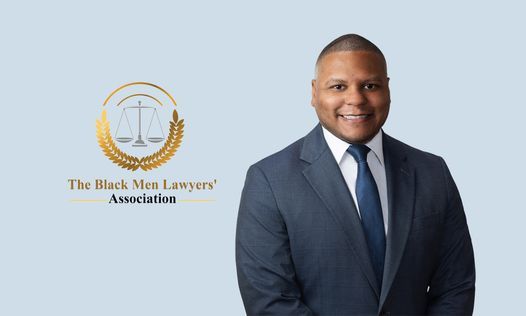
Calvin Edwards Honored With 2026 Rising Star Award by the Black Men Lawyers’ Association

Webinar
Jun 9, 2026
John DeLascio Speaks on How Social Inflation is Reshaping Insurance Risk

Insights for Employers Alert
Jun 9, 2026
A Win for Employers: Federal District Court Finds $100,000 H-1B Visa Petition Fee is Unlawful
Press Release
Jun 9, 2026
Calvin Edwards Honored With 2026 Rising Star Award by the Black Men Lawyers’ Association
Webinar
Jun 9, 2026
John DeLascio Speaks on How Social Inflation is Reshaping Insurance Risk
Consumer Crossroads: Where Financial Services and Litigation Intersect
Jun 8, 2026
Court Distinguishes Between Clickwrap and Browsewrap Arbitration Agreements

Webinar
Jun 8, 2026
Aimee Delaney and Jason Oliveri Speak on Workplace Generative AI Usage

Insights for Insurers Alert
Jun 8, 2026
New York’s Sweeping Motor Vehicle Tort Law Reforms: More Than Meets the Eye

Privacy, Cyber & AI Decoded Alert
Jun 5, 2026
AI Governance Expectations on the Rise for Insurers Amid New Regulatory Activity

Press Release
Jun 4, 2026
Hinshaw Recognized Nationally in 2026 Chambers USA Directory
Press Release
Jun 3, 2026
In The News
Jun 3, 2026
Scott Seaman Discusses Wrongful-Death and Survival Actions Handbook on IICLE Podcast

