
Insured Cannot Bring Common Law Claim for Breach of the Implied Warranty of Good Faith and Fair Dealing Separate and Apart From Claim for Statutory Bad Faith
Insights for Insurers Alert | 3 min read
Jun 5, 2012
In Chalfonte Condominium Apartment Association, Inc. v. QBE Insurance Corp., No. SC09-441, (May 31, 2012), the Florida Supreme Court was called upon to decide (among other certified questions*) whether an insured may bring a common law claim for breach of the implied warranty of good faith and fair dealing separate and apart from a claim for statutory bad faith.
The U.S. Court of Appeals for the Eleventh Circuit had certified questions to the Florida Supreme Court, explaining that “[n]o Florida court has explicitly held that an insured may bring a claim for breach of the implied warranty of good faith and fair dealing for an insurer’s failure to investigate and assess its insured’s claim within a reasonable period of time.” Chalfonte Condominium Apartment Association, Inc. v. QBE Insurance Corp., 561 F.3d 1267 (11th Cir. 2009). On the other hand, the court noted “[n]or do we believe that the Florida courts have decisively held that a statutory bad faith action provides the exclusive remedy for an insurer’s failure to investigate and assess its insured’s claim within a reasonable period of time.” Still further, “Florida courts have not determined whether the bifurcation requirement applicable to statutory bad faith claims also applies to a claim for breach of the implied warranty of good faith and fair dealing based on an insurer’s failure to investigate and assess its insured’s claim within a reasonable period of time.”
The Florida Supreme Court concluded that claims against insurers for failure to promptly investigate a claim “are actually statutory bad-faith claims that must be brought under section 624.155 of the Florida Statutes.” In reaching this result, the Court acknowledged that Florida contract law recognizes an implied covenant of good faith and fair dealing in every contract, and noted that this covenant is intended to protect “the reasonable expectations of the contracting parties in light of their express agreement.” Nevertheless, the Court emphasized that it has specifically declined to adopt the doctrine of reasonable expectations in the context of insurance contracts, concluding that construing insurance policies under this doctrine “can only lead to uncertainty and unnecessary litigation.”
The Court mentioned two limitations on claims involving alleged breach of implied covenant of good faith and fair dealing: “(1) where application of the covenant would contravene the express terms of the agreement; and (2) where there is no accompanying action for breach of an express term of the agreement.” Further, because a statutorily created bad faith cause of action was created by the Florida legislature in Fla. Stat. § 624.155, the only remedy available is the statutory bad-faith action created by that statute.
* The Court also held that: an insured cannot bring a claim against an insurer for failure to comply with the language and type-size requirements established by Fla. Stat. § 627.701(4)(a); an insurer’s failure to comply with the language and type-size requirements established in Section 627.701(4)(a) does not render a noncompliant hurricane deductible provision in an insurance policy void and unenforceable as the legislature has not provided for this penalty; and a contractual provision mandating payment of benefits upon “entry of a final judgment” does not waive the insurer’s procedural right to post a bond and stay the execution of a money judgment pending resolution of appeal.”
Practice Note
As a practice note for first-party property defense practitioners involved in any lawsuit where a claim for breach of the implied warranty of good faith has been made, the legal practitioner should immediately seek dismissal of the claim, based on clear opinion expressed by the Florida Supreme Court in Chalfonte Condominium Apartment Association.
This alert has been prepared by Hinshaw & Culbertson LLP to provide information on recent legal developments of interest to our readers. It is not intended to provide legal advice for a specific situation or to create an attorney-client relationship.
Related Capabilities
Featured Insights

Insights for Employers Alert
Jun 9, 2026
A Win for Employers: Federal District Court Finds $100,000 H-1B Visa Petition Fee is Unlawful
Press Release
Jun 9, 2026
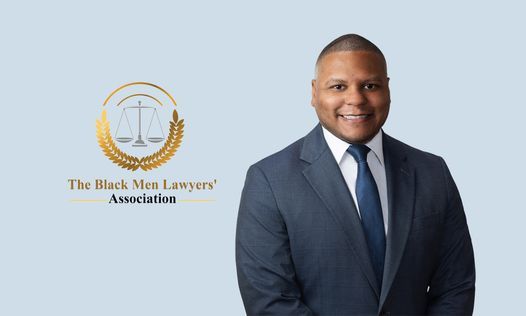
Calvin Edwards Honored With 2026 Rising Star Award by the Black Men Lawyers’ Association
Webinar
Jun 9, 2026
John DeLascio Speaks on How Social Inflation is Reshaping Insurance Risk

Insights for Employers Alert
Jun 9, 2026
A Win for Employers: Federal District Court Finds $100,000 H-1B Visa Petition Fee is Unlawful
Press Release
Jun 9, 2026
Calvin Edwards Honored With 2026 Rising Star Award by the Black Men Lawyers’ Association
Webinar
Jun 9, 2026
John DeLascio Speaks on How Social Inflation is Reshaping Insurance Risk
Consumer Crossroads: Where Financial Services and Litigation Intersect
Jun 8, 2026
Court Distinguishes Between Clickwrap and Browsewrap Arbitration Agreements

Webinar
Jun 8, 2026
Aimee Delaney and Jason Oliveri Speak on Workplace Generative AI Usage

Insights for Insurers Alert
Jun 8, 2026
New York’s Sweeping Motor Vehicle Tort Law Reforms: More Than Meets the Eye

Privacy, Cyber & AI Decoded Alert
Jun 5, 2026
AI Governance Expectations on the Rise for Insurers Amid New Regulatory Activity
Press Release
Jun 4, 2026
Hinshaw Recognized Nationally in 2026 Chambers USA Directory
Press Release
Jun 3, 2026
In The News
Jun 3, 2026
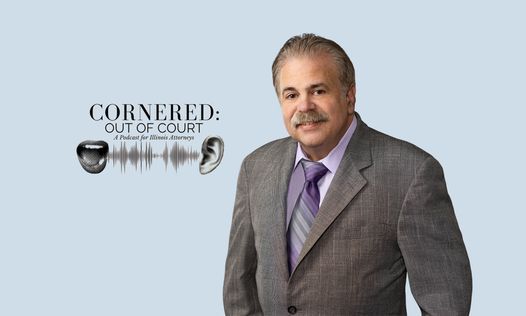
Scott Seaman Discusses Wrongful-Death and Survival Actions Handbook on IICLE Podcast

