
Second Circuit Allows Undisclosed Ghostwriting
Lawyers for the Profession® Alert
Lawyers for the Profession® Alert | 2 min read
Dec 21, 2011
In re Liu, ___ F.3d ___, 2011 WL 5839658 (2d Cir. 2011) (per curiam)
Brief Summary
The U.S. Court of Appeals for the Second Circuit held that absent a local rule stating otherwise, a lawyer may ghostwrite a brief without disclosing his or her role in such drafting to the court.
Complete Summary
The Second Circuit’s Committee on Attorney Admissions and Grievances (Committee) recommended that an attorney be reprimanded for “conduct unbecoming a member of the bar” based on a number of underlying offenses. The court adopted that recommendation based on all but one of the offenses, namely, the attorney’s undisclosed drafting of a brief for a pro se litigant.
The Second Circuit held that undisclosed ghostwriting did not constitute misconduct. The Committee had found that the attorney violated her duty of candor to the court (i.e., DR 11-102(A)(4)). The Second Circuit disagreed, noting that there was no express rule requiring disclosure of ghostwriting activity. Without such a rule, the court was not willing to conclude that the attorney knew or should have known of a duty of disclosure or of the potential for misleading the court.
Although the court acknowledged prior holdings to the contrary, it cited a trend among ethics committees and courts—especially at the state level—toward allowing undisclosed ghostwriting.
In response to the oft-cited argument that undisclosed ghostwriting gives pro se litigants an advantage because courts grant leniency to such litigants, the Second Circuit agreed with American Bar Association (ABA) Formal Opinion 07-446, in which the ABA Standing Committee on Ethics and Professional Responsibility opined that a lawyer’s involvement will generally be evident to the tribunal. That fact also weighed against finding that the nondisclosure was dishonest.
Significance of Opinion
This opinion continues the trend toward allowing undisclosed ghostwriting and may be a significant marker for the federal courts going forward. In its opinion, the court did not purport to decide how it would consider a case in which a party’s lawyer ghostwrites an amicus brief without disclosure to the court, particularly if the amicus application or statement of interest states or suggests a degree of independence that may not exist in fact.
This alert has been prepared by Hinshaw & Culbertson LLP to provide information on recent legal developments of interest to our readers. It is not intended to provide legal advice for a specific situation or to create an attorney-client relationship.
Related Capabilities
Featured Insights

Webinar
Jun 9, 2026
John DeLascio Speaks on How Social Inflation is Reshaping Insurance Risk
Consumer Crossroads: Where Financial Services and Litigation Intersect
Jun 8, 2026
Court Distinguishes Between Clickwrap and Browsewrap Arbitration Agreements

Webinar
Jun 8, 2026
Aimee Delaney and Jason Oliveri Speak on Workplace Generative AI Usage


Webinar
Jun 9, 2026
John DeLascio Speaks on How Social Inflation is Reshaping Insurance Risk
Consumer Crossroads: Where Financial Services and Litigation Intersect
Jun 8, 2026
Court Distinguishes Between Clickwrap and Browsewrap Arbitration Agreements
Webinar
Jun 8, 2026
Aimee Delaney and Jason Oliveri Speak on Workplace Generative AI Usage

Insights for Insurers Alert
Jun 8, 2026
New York’s Sweeping Motor Vehicle Tort Law Reforms: More Than Meets the Eye

Privacy, Cyber & AI Decoded Alert
Jun 5, 2026
AI Governance Expectations on the Rise for Insurers Amid New Regulatory Activity
Press Release
Jun 4, 2026
Hinshaw Recognized Nationally in 2026 Chambers USA Directory
Press Release
Jun 3, 2026
In The News
Jun 3, 2026
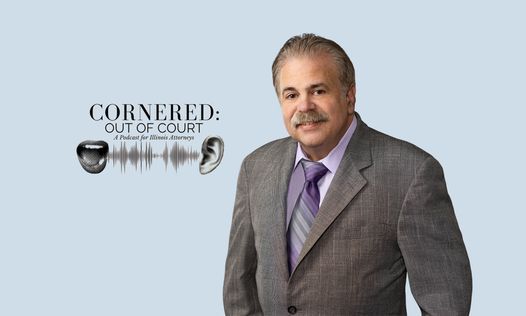
Scott Seaman Discusses Wrongful-Death and Survival Actions Handbook on IICLE Podcast

Press Release
Jun 2, 2026
Palma Yanni Honored With 2026 Achievement Award by Mount Holyoke College

In The News
Jun 2, 2026
Jason Rosen Explores the Opportunities and Uncertainties of Florida’s New Series LLC Law

