
Bank Not Liable to Architects Under "Instrumentality" Theory for Defaulted Developer's Nonpayment of Fees
Lawyers for the Profession® Alert | 2 min read
May 9, 2011
The Middlesex Superior Court (Massachusetts) recently considered whether architects hired by a real estate developer could hold the bank that financed the construction project liable for the professional fees that the developer failed to pay. Creative West Architects, LLC, et al. v. Downtown Natick Development Co., LLC et al.,Case No. 2009-4513-A (Apr. 12, 2011).
Plaintiff architects entered into contracts with a developer to provide architectural services related to the development of a condominium project. Pursuant to their contracts, the architects agreed to defer a portion of their fees—$12,000 for each of eight units—until the closing for each unit. Ultimately, the project ran into financial difficulties and the developer stopped making interest payments on its loan from defendant bank. The bank consequently declared the developer in default. The developer also failed to pay the architects approximately $100,000 in fees.
After the default, the bank took control of the project. The bank paid the developer's former project manager directly in an individual capacity to oversee the project's completion, assumed decision-making authority on construction decisions, replaced the original general contractor with its own contractor, and hired a replacement architectural firm. It refused to pay the architects for the services provided to the developer prior to the default.
The architects sued, alleging that the bank was liable for the developer's nonpayment of fees under an "instrumentality" theory. They also argued that the bank had assumed sufficient control over the developer such that the developer was being used to further the bank's purposes and that the developer in reality had no separate, independent existence of its own.
The superior court rejected the architect's instrumentality theory of lender liability, noting that liability under the theory would require a showing that the bank exerted such a degree of control over the borrower—in this case the developer—as to render the borrower "a mere business conduit for the lender." The court noted that the instrumentality theory addresses control over the borrower itself, not the project, and that the bank merely took control of the project as a result of the developer's default. The court also rejected the architects' mechanics' lien claim on the ground that the architects had failed to strictly comply with the statute's procedural requirements.
Practice Note
Professional service providers should carefully consider the possible risks of entering into an agreement to accept deferred compensation, which the architects had done here, particularly given the current economic climate. Also, it is critical that architects and other design professionals take the necessary steps to preserve all avenues of potential recovery of fees including, where available, mechanics' liens.
Related Capabilities
Featured Insights

Insights for Employers Alert
Jun 9, 2026
A Win for Employers: Federal District Court Finds $100,000 H-1B Visa Petition Fee is Unlawful
Press Release
Jun 9, 2026
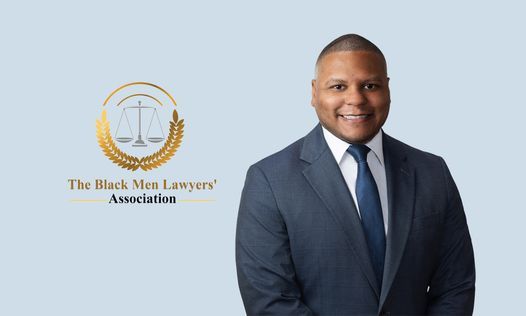
Calvin Edwards Honored With 2026 Rising Star Award by the Black Men Lawyers’ Association
Webinar
Jun 9, 2026
John DeLascio Speaks on How Social Inflation is Reshaping Insurance Risk

Insights for Employers Alert
Jun 9, 2026
A Win for Employers: Federal District Court Finds $100,000 H-1B Visa Petition Fee is Unlawful
Press Release
Jun 9, 2026
Calvin Edwards Honored With 2026 Rising Star Award by the Black Men Lawyers’ Association
Webinar
Jun 9, 2026
John DeLascio Speaks on How Social Inflation is Reshaping Insurance Risk
Consumer Crossroads: Where Financial Services and Litigation Intersect
Jun 8, 2026
Court Distinguishes Between Clickwrap and Browsewrap Arbitration Agreements

Webinar
Jun 8, 2026
Aimee Delaney and Jason Oliveri Speak on Workplace Generative AI Usage

Insights for Insurers Alert
Jun 8, 2026
New York’s Sweeping Motor Vehicle Tort Law Reforms: More Than Meets the Eye

Privacy, Cyber & AI Decoded Alert
Jun 5, 2026
AI Governance Expectations on the Rise for Insurers Amid New Regulatory Activity

Press Release
Jun 4, 2026
Hinshaw Recognized Nationally in 2026 Chambers USA Directory
Press Release
Jun 3, 2026
In The News
Jun 3, 2026
Scott Seaman Discusses Wrongful-Death and Survival Actions Handbook on IICLE Podcast

